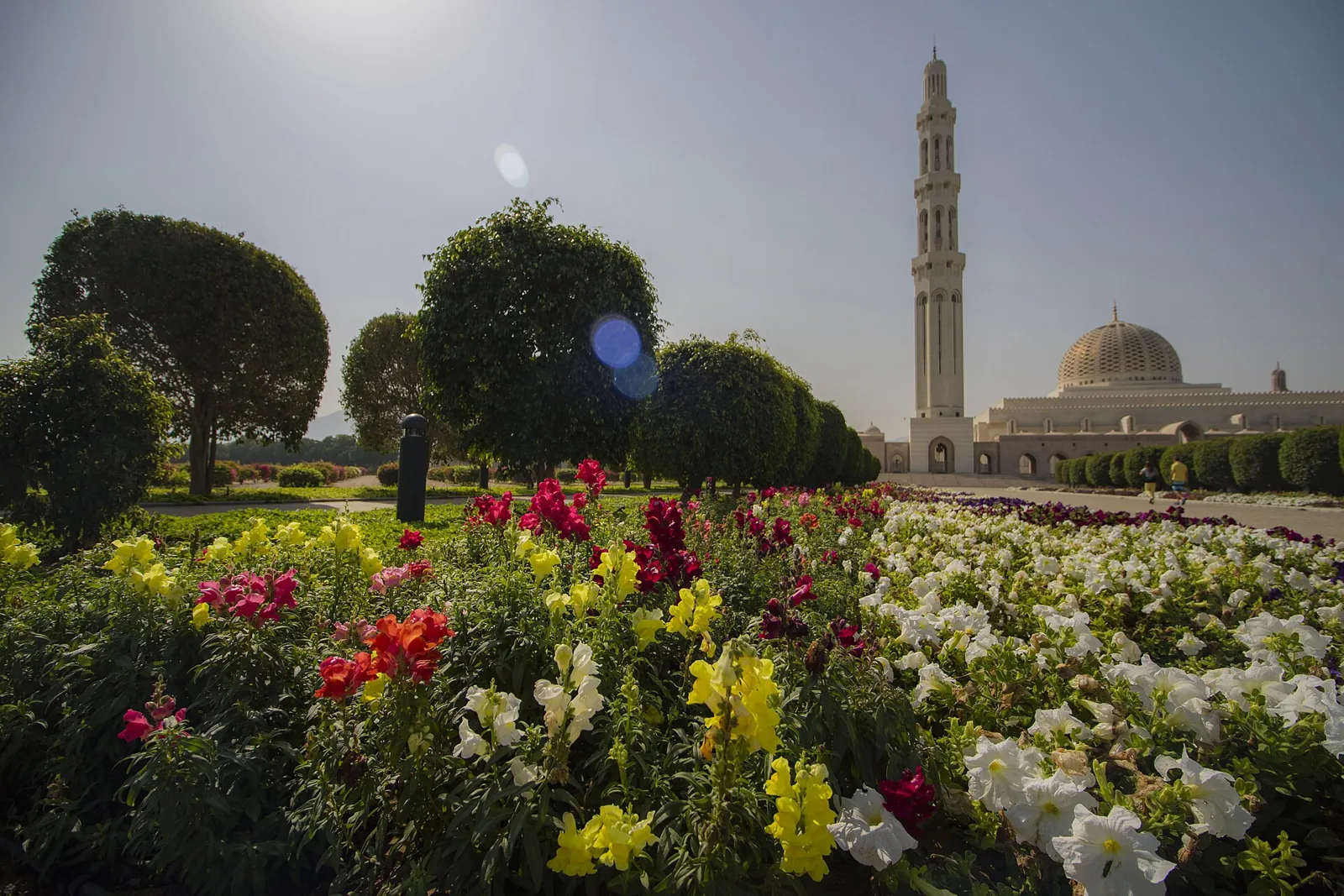
Muscat's Sultan Qaboos Grand Mosque rewards a slower kind of sightseeing. Pale stone, shaded arcades and carefully composed gardens create a sense of calm before visitors even reach the prayer spaces.
This is a working place of worship. Build your visit around the mosque's arrangements, rather than treating it as an attraction that must fit a rushed city tour.
What makes the mosque special
The complex opened in 2001 and combines a large central dome with five minarets. Its scale is impressive, but so are the details: patterned surfaces, filtered light and the relationship between open courtyards and enclosed prayer halls.
Look closely at the decorative work without touching furnishings or blocking other visitors. A good visit is less about collecting record-breaking superlatives and more about understanding how architecture supports worship.
Visiting hours and admission
Experience Oman's official listing gives non-Muslim visitor hours as Saturday to Thursday, 8–11am. Worship, religious occasions and operational arrangements can affect access, so reconfirm before travelling.
The same official listing currently shows an OMR 8 admission figure. Online guides disagree about charges, so check the current visitor arrangement and any exemptions directly; do not assume older claims of universally free entry remain correct.
- Choose an early morning visit for cooler conditions and more time.
- Avoid planning your last arrival just before the visitor period ends.
- Allow time for entry procedures, modest clothing and the grounds.
- Treat Friday as a worship day rather than a default sightseeing slot.
Dress and respectful behaviour
Wear loose clothing that covers shoulders and knees; women should bring a scarf to cover their hair. Ask staff if you are unsure whether your outfit meets the current requirements.
Remove shoes where instructed, keep voices low and follow signs around prayer areas. Seek permission before photographing people, particularly worshippers, and never interrupt prayer for a picture.
Photography without disruption
Wide exterior views work well when the light is gentle. Use the arcades and gardens to frame architectural details while leaving walkways clear.
Interior photography depends on the rules in force during your visit. Follow staff instructions about cameras, tripods and restricted areas; a previous visitor's social post is not permission.
Getting there and building a Muscat day
A taxi or pre-arranged driver is convenient if you are combining the mosque with other parts of spread-out Muscat. Confirm the return pickup and the fare arrangement before leaving your accommodation.
Afterwards, consider the National Museum or a later walk by Mutrah's waterfront. Avoid packing too many distant stops into the hottest part of the day.
Who will enjoy the visit?
Architecture enthusiasts, thoughtful first-time visitors and travellers interested in Oman's religious heritage will find much to appreciate. Families can enjoy the grounds too, with an explanation beforehand about quiet behaviour and the significance of the setting.
Read our Oman country guide for cultural context and the Royal Opera House guide for another carefully planned Muscat experience.
A final planning check
Confirm visitor opening, admission and dress requirements shortly before your visit. Respectful preparation makes the experience easier for visitors and for the community whose place of worship this is.
Sources and image notes
Information checked 24 October 2026. Hours, fees, eligibility and availability can change; confirm through the relevant official source.
Photograph: Gardens with an incidental view of Sultan Qaboos Grand Mosque in Muscat. Mostafameraji / Wikimedia Commons, CC BY-SA 4.0. Source-supplied date: 2017-03-31 02:54:21. Resized and converted to WebP. This is a real photograph from the stated source date, not a live view or confirmation of current access. Context photograph; it does not document a particular residence, visa process or the current status of a project.
