Germany offers a substantial business market, but it should not be approached as a package in which one licence automatically buys a residence visa. Company formation, permission to perform a regulated activity and the founder's immigration position are separate questions.
Begin with the activity and the person who will actually work in Germany. A foreign shareholder and a resident owner-manager can have different obligations even when they invest in the same company.
Choose a structure for the real business
A GmbH is a limited-liability company. Germany Trade & Invest describes minimum share capital of €25,000, with at least €12,500 contributed at registration for the usual minimum-capital cash formation. Share capital is not a government visa fee; obtain advice on the remaining liability and lawful use of company funds.
A UG can have much lower legal starting capital, but that does not make a viable business cost €1. Formation, accounting and operating bills still exist. Discuss the legal form with a notary and tax adviser rather than choosing only the smallest advertised capital figure.
A practical formation sequence
- Define the business activity, ownership and management arrangements.
- Check sector permissions and whether a professional qualification is relevant.
- Agree the appropriate company documents with a German notary.
- Arrange banking and the required capital contribution.
- Complete the applicable register, trade and tax steps before operating.
The precise sequence depends on the structure and activity. A commercial company and a recognised liberal profession should not be treated as interchangeable labels. Ask who is responsible for each filing and retain written confirmation of what has actually been completed.
Residency: test eligibility separately
For relevant non-EU founders, Germany's self-employment route assesses the business case, financing and expected economic contribution. Freelance activity has its own requirements, including any necessary professional authorisation. A company registration certificate alone does not satisfy every immigration condition.
Use the responsible German mission's checklist and the local foreigners authority. Existing permission may have restrictions, and nationality-specific entry exceptions should not be confused with permission to start working.
Build a cost sheet, not a single package total
- Formation: notary, registration, translations and any authentication.
- Operations: premises, banking, software, insurance and sector compliance.
- Professional support: bookkeeping, tax returns, payroll and legal advice where needed.
- Immigration: relevant application charges, insurance and document preparation.
- Personal runway: rent, deposits, food and family costs while revenue develops.
Ask advisers to separate one-time charges, recurring bills and refundable deposits. Do not add share capital to a list of fees without explaining what it represents, and do not assume that capital available for business use is spare personal spending money.
Taxes and employees
Germany is not a zero-tax business jurisdiction. Corporate income tax, trade tax, VAT and payroll obligations may be relevant depending on the structure and transactions. Cross-border selling can add obligations that a basic formation service does not cover.
Request advice using your expected customers, location and staffing plan. An employee's work permission, social insurance and payroll administration are not completed simply because the employer exists.
Timelines and next steps
Allow for banking checks, document preparation, appointments and permit decisions. There is no responsible universal promise that every founder can finish company formation and residency in two weeks.
Prepare a business plan, a realistic cash-flow forecast and a written responsibility list. Speak to a qualified German notary, tax adviser and, where necessary, immigration professional before making a binding commitment.
Frequently asked questions
Does buying a GmbH guarantee residency?
No. Immigration eligibility and the right to work must be assessed separately.
Is a UG a €1 all-inclusive business?
No. Its minimum capital is not the total startup or operating budget.
Continue planning Germany
- Plan a first trip to Germany
- Germany Explained: History, Federal States, Food and Everyday Culture
- Neuschwanstein Castle Visitor Guide: Tickets, Timed Tours and Photography
- Germany’s Sacred Heritage: Cologne Cathedral, Erfurt and Respectful Visiting
- Germany’s Infrastructure Projects: Stuttgart 21, Fehmarnbelt and What Travellers Can Use
- Germany on a Budget: Free Walks, Regional Trains and Costs to Check
- Germany’s Hidden Corners and Food Trails: Quedlinburg, Bamberg and Franconia
- How to Move to Germany Legally: Work, Study, Family and Self-Employment Routes
- Luxury Travel in Germany: Baden-Baden, Cultural City Stays and Private Experiences
Official sources and photograph credit
Reconfirm current rules, access and charges with the responsible official source before booking or applying.
- GTAI company formation
- Federal Chamber of Notaries formation guidance
- Official self-employment visa requirements
- GTAI corporate taxation overview
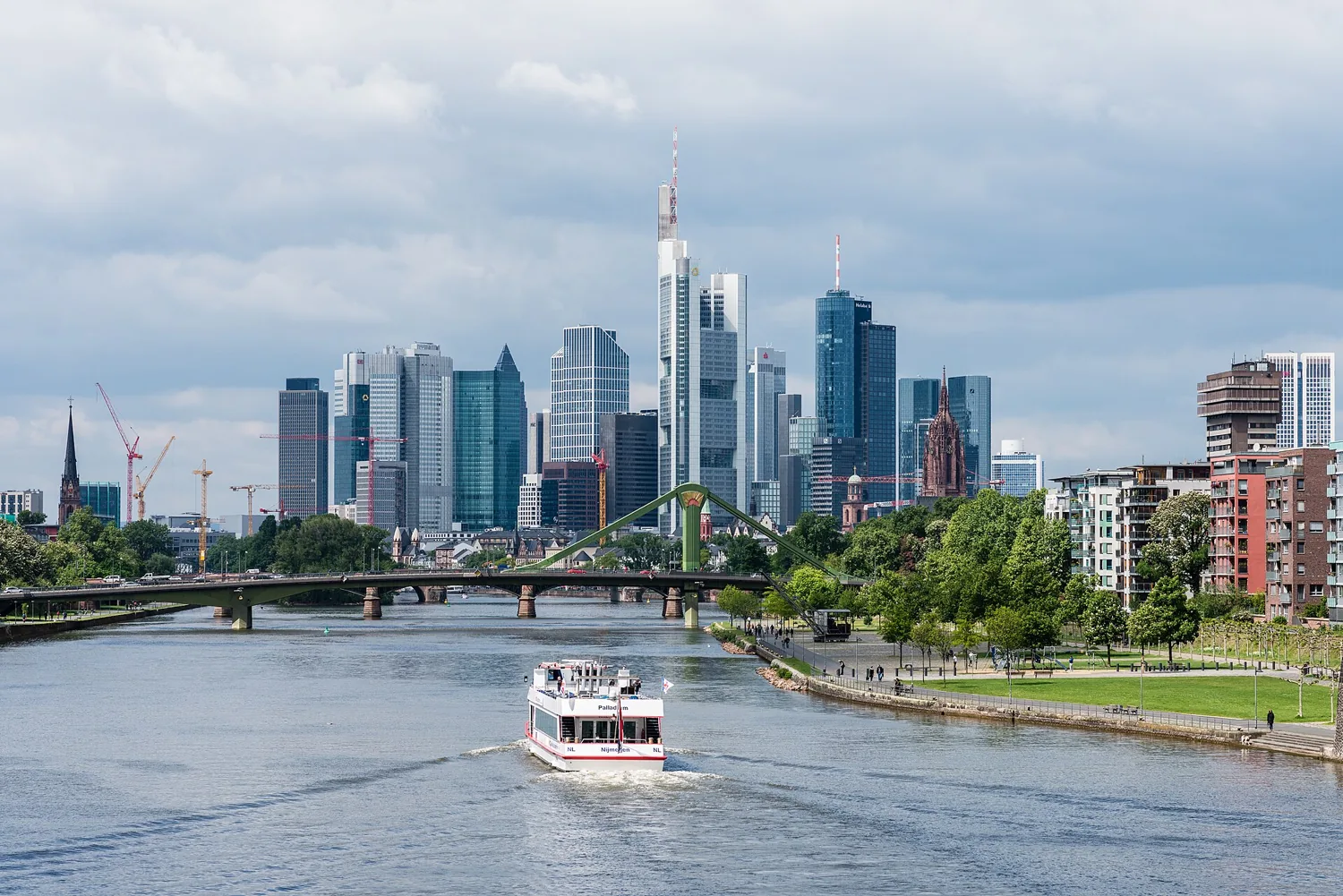
Photograph: Norbert Nagel; Frankfurt Skyline with river Main 2014.jpg; CC BY-SA 4.0. Resized and converted to WebP. Genuine archival photograph, not a live view.
