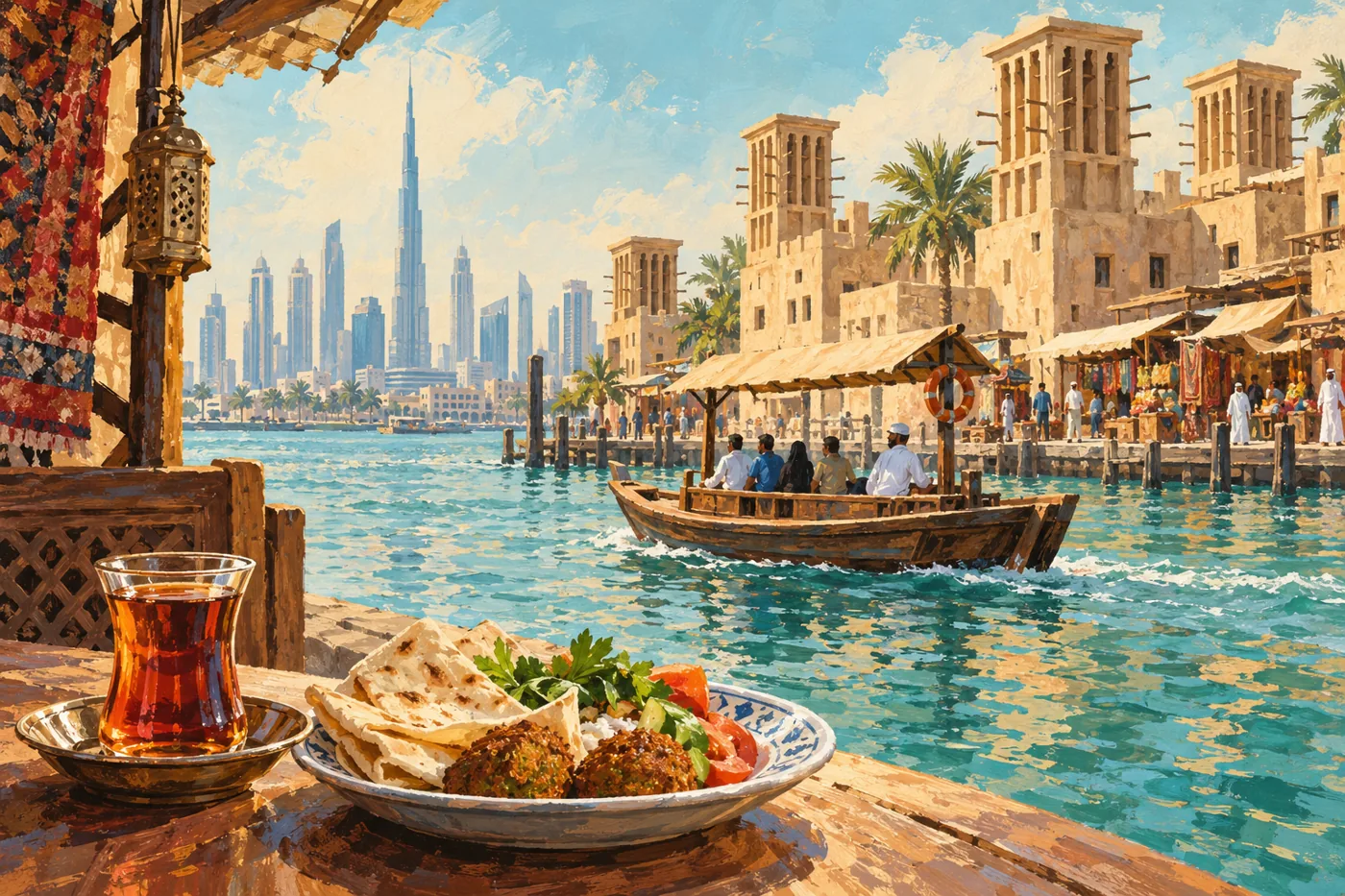
Dubai can be expensive, but seeing it does not require a luxury itinerary. Much of the city’s character is found beside the water, in its trading streets and at neighbourhood tables rather than behind an admission gate.
The trick is to group free places geographically and spend deliberately on transport and food. A free attraction on the opposite side of the city can cost more to reach than a modest paid activity near your hotel.
Cross Dubai Creek for AED 1
Use a traditional motorised abra rather than assuming every boat on the Creek charges the same fare. RTA lists CR1 between Bur Dubai and Deira Old Souq, and CR2 between Dubai Old Souq and Al Sabkha, at AED 1 per passenger for a one-way trip, cash only.
Carry small change and follow the crew’s boarding instructions. The short crossing is ordinary public transport, which is exactly what makes it such an enjoyable glimpse of working Dubai.
Newer heritage services on other routes can cost AED 2, while private charters and tourist rides cost much more. Check the station and service before joining a queue; a cheap crossing is not an hour-long sightseeing cruise.
Browse the souks without a shopping budget
Walk through the Spice Souk and Gold Souk in Deira, then explore the textile lanes across the Creek. Browsing is free, and late afternoon usually makes walking more comfortable than midday.
You can admire a shop without purchasing anything. If you do buy, compare a few sellers, confirm the total price and keep the receipt rather than allowing an enthusiastic sales pitch to become your daily budget.
Watch Dubai Fountain from public areas
The waterfront by Dubai Mall offers free views of the choreographed fountain performances. The mall’s published evening timetable lists shows every 30 minutes from 6pm to 11pm; confirm the current programme because maintenance, events and crowd controls can change access.
Arrive ahead of a performance and choose a permitted public viewing area. Boardwalk access, boat rides and restaurant terraces are optional paid products, not requirements for seeing the show.
Do not confuse fountain performances with special Burj Khalifa LED or laser programmes. Our Burj Khalifa guide separates the different experiences and viewing choices.
Make Alserkal Avenue an art afternoon
Alserkal Avenue in Al Quoz brings galleries and creative businesses into former warehouse spaces. Many gallery exhibitions can be browsed without a general admission ticket, while cinema screenings, workshops, performances and special events may charge separately.
The Avenue publishes general hours of 10am–7pm, but individual galleries keep their own schedules. Pick two or three exhibitions, check their pages first and avoid arriving after a particular gallery has closed.
There is no Metro entrance at the Avenue itself. Use a sensible Metro-and-taxi or bus combination, and remember that an industrial-area walk can feel very different in summer heat.
Choose a public beach
Kite Beach suits a straightforward seaside walk, a swim in permitted conditions and people-watching. The public beachfront around JBR combines sea views with a busy promenade and plenty of food options.
Public beach access can be free, but loungers, umbrellas, lockers, parking, water sports and beach clubs are separate expenses. Bring a towel, follow lifeguard flags and use appropriate clothing when leaving the sand for streets or shops.
For JBR, combine Metro with tram or the pedestrian approach that best suits your hotel. Kite Beach usually needs a bus or taxi connection; compare the full return fare rather than just the admission cost.
Eat well in Karama and Bur Dubai
Karama and nearby Bur Dubai offer casual cafeterias and South Asian restaurants where a simple meal can be more affordable than dining beside a famous landmark. Look for freshly prepared shawarma, falafel, dosa, chaat or a rice plate, then compare the displayed menu before ordering.
- Order one main item before adding sides; portions can be larger than expected.
- Ask whether a rice or grilled dish is intended to share.
- Check whether water, extras, tax and service are included in the displayed total.
- Choose busy, well-kept places, and explain allergies clearly rather than guessing ingredients from a photograph.
As a planning allowance rather than a quoted menu, AED 20–35 can cover a simple casual meal in some neighbourhood venues. You can spend less on a snack or much more at a sit-down restaurant; use the menu in front of you as the actual price.
Two low-cost day plans
- Old Dubai day: Al Fahidi lanes, a modest lunch in Bur Dubai, one abra crossing and the Deira souks. Walking is free; reserve money for each boat trip, food and the Metro/bus journey.
- Beach and Downtown day: an early public-beach visit, a break during the heat, then the mall’s public spaces and evening fountain views. Travel between these areas is the main hidden cost.
For an illustrative solo day, allow AED 2 for two traditional crossings, AED 40–70 for two casual meals and roughly AED 20–40 as a transport allowance, depending on route and ticket choice. This AED 62–112 example excludes accommodation, flights, visas, shopping, paid attractions and any taxi; it is not a guaranteed minimum.
Spend less by travelling more slowly
Stay near a useful transport connection, compare hotel totals including taxes and choose a small number of paid highlights. Avoid buying a sightseeing pass until you have checked opening days, included attractions and whether you would actually visit them all.
Outdoor walks are easiest in the cooler months; in summer, heat can make a seemingly cheap walking route impractical. See our Dubai attraction guide to choose where a ticket is worthwhile, and our quieter Dubai spots for more low-cost discoveries.
Sources and image notes
Information checked 23 October 2026. Entry fees, transport, opening hours and access can change; check the linked official source before travelling.
- RTA: traditional AED 1 crossings and cash payment
- RTA: different abra types and fares
- Dubai Mall: fountain information
- Alserkal Avenue: current opening hours
- Visit Dubai: official trip-planning resources
Image: original AI-assisted editorial illustration created for PackUpYourBags. It is not a photograph, an exact site depiction or a geographic map.