France's transport investment is easiest to understand when you separate three questions: what is being built, which part is operating, and what a traveller can book today. A station on a future network map is not automatically an available connection.
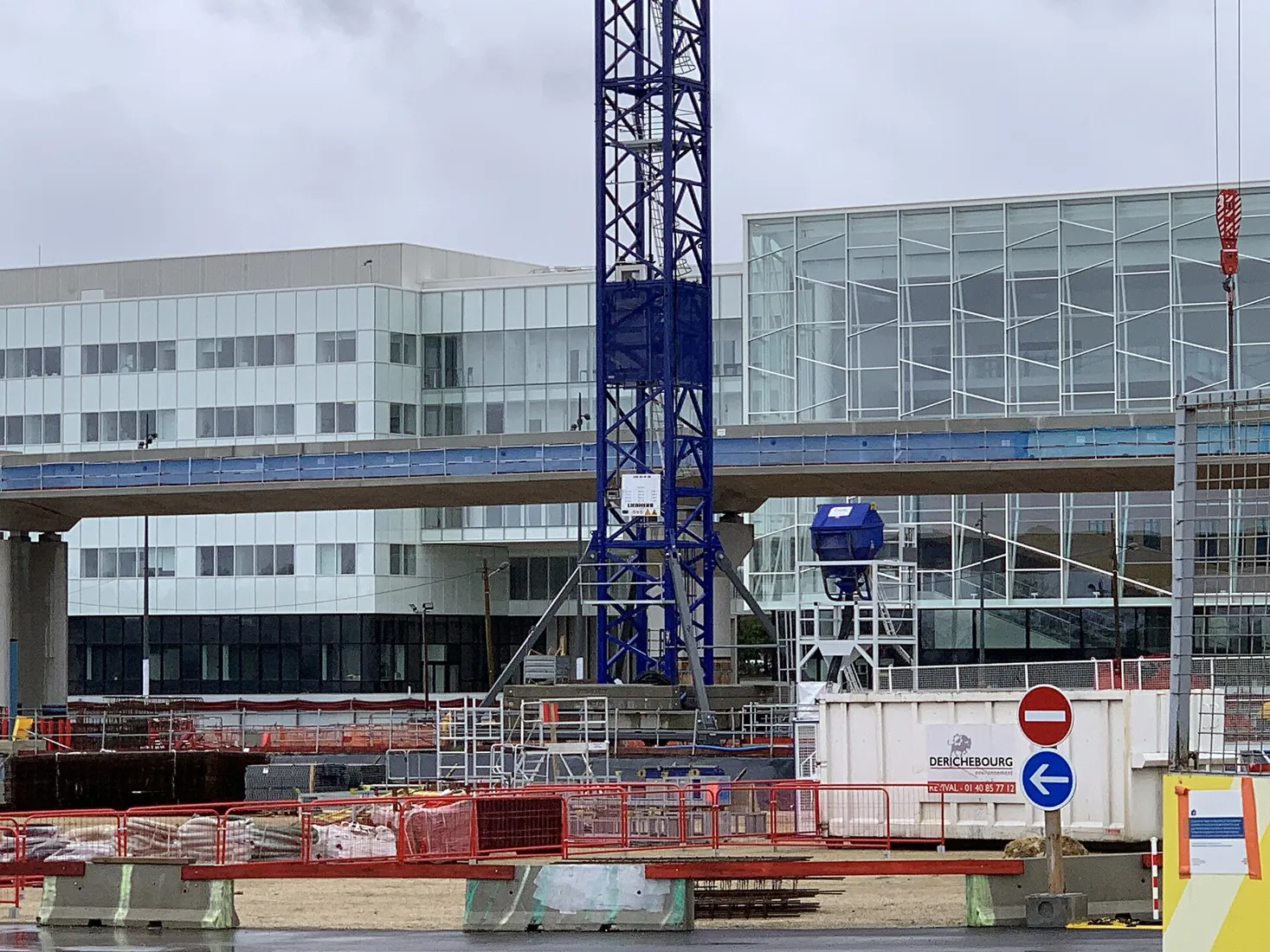
This article focuses on Grand Paris Express and the wider railway network. Its construction photograph is archival, not proof of the site's exact condition on the date you read it.
Grand Paris Express: connecting the wider region
The project owner's official site presents new lines 15, 16, 17 and 18 alongside the line 14 extensions. Its network is about more than journeys into central Paris: connections between outer areas are an important part of the idea.
Do not assume the whole illustrated network opened together. Refer to dated project updates for construction, and the regional transport operator for actual passenger services. Testing, station completion and commercial opening are different milestones.
What a new station can change
A station can alter the practical relationship between housing, employment, education and an airport. But a proposed travel-time saving is not a guarantee for an individual commute or a reason to buy property without independent checks.
For a hotel booking, search the journey from the property's actual entrance to your destination. Include the final walk and the service hours. Being near a construction site does not mean being near a functioning station entrance.
Rail renewal is less visible but equally important
SNCF Réseau is the infrastructure manager behind substantial work on the existing rail network. Track and systems work can matter to a traveller even when there is no spectacular new building to photograph.
Distinguish the infrastructure organisation from the company selling or operating your particular train. For a ticket problem or changed departure, use the responsible operator's current instructions rather than assuming the infrastructure project page manages your booking.
Construction and your actual itinerary
Planned engineering can change the suitable route, interchange margin or departure station. Check the timetable for the actual date instead of relying on the duration quoted in an old itinerary.
An inexpensive non-refundable onward booking can become awkward if you have allowed almost no time to change stations. Compare the whole chain of travel and keep a reasonable buffer for luggage, unfamiliar layouts and any assistance arrangement.
How to read a project announcement
- Identify whether it refers to a tunnel, a station, testing or passenger opening.
- Check the announcement date and any newer revision.
- Use an operating journey planner for the trip you intend to make.
- Treat a future network simulation as an illustration, not a booking confirmation.
The distinction is particularly important for airport journeys. A planned new connection does not change today's ticket validity or eliminate a transfer until the service is actually operating.
Visiting an engineering site
Use a formally advertised visitor programme or public viewpoint. Working sites are not public shortcuts, and a gap in fencing is not an invitation to enter.
If a guided visit exists, ask about the meeting point, language, age restrictions and accessible route. Keep construction images clearly dated when sharing them so that others do not mistake an old site condition for a current service update.
Frequently asked questions
Can I use every line on the future Grand Paris map?
No such assumption should be made. Check the current operating network for your date.
Does a finished station photograph establish that trains stop there?
No. Technical testing and passenger commissioning must be verified separately.
Continue planning France
- Plan a first trip to France
- France Explained: History, Regional Identity, Food and Everyday Culture
- Eiffel Tower Visitor Guide: Ticket Choices, Timing, Dining and Free Views
- Sacred France: Notre-Dame, Mont-Saint-Michel and Respectful Heritage Visits
- France on a Budget: Paris Walks, Local Food and Smarter Transport Choices
- France Beyond the First Itinerary: Albi, Dijon and Regional Food Trails
- Business Setup in France: Registration, Costs and Entrepreneur Residency
- How to Move to France Legally: Work, Study, Family and Entrepreneur Routes
- Luxury Travel in France: Paris, the Riviera and Experiences Worth Planning
Official sources and photograph credit
Reconfirm current rules, access and charges with the responsible official source before booking or applying.
- Grand Paris Express official project information
- Île-de-France Mobilités current travel information
- SNCF Réseau infrastructure information
Photograph: Jmex; Chantier Orsay-gif.jpg; CC BY-SA 4.0. Resized and converted to WebP. Genuine archival photograph, not a live view.
