Italy invites ambitious itineraries, but its most rewarding moments often happen between the headline sights. Leave room for a neighbourhood bakery, a market conversation and an evening walk after the day visitors have moved on.
For a first trip, choose a small number of bases and give each one time. Rome, Florence and Venice form a useful starting framework; a beach, island or mountain extension needs additional days rather than wishful scheduling.
Key takeaways
- Two bases are often more comfortable than three for a short week.
- Book essential timed attractions before filling the rest of the itinerary.
- Compare rail tickets by flexibility and conditions, not price alone.
- Separate visitor entry permission from any right to work or settle.
Where to go
Rome: ancient sites and living neighbourhoods
Rome suits travellers interested in archaeology, religious heritage and busy urban life. Group sights geographically and leave gaps for shade, meals and security queues rather than scheduling attractions back to back.
For the Colosseum, confirm the exact areas included and current identification requirements through the official archaeological park. The Vatican Museums and St Peter’s Basilica have distinct visitor arrangements; do not assume one ticket covers both.
Florence and Tuscany: art with a regional contrast
Florence is a natural choice for Renaissance art and a compact historic centre. Choose your priority gallery, then balance the visit with less structured streets, gardens or a food stop.
For a Tuscan excursion, check the final bus or tour connection to your chosen town. A countryside photograph can hide steep paths and limited transport; select the outing for your actual mobility and available time.
Venice: spend time beyond the busiest route
Venice suits travellers who enjoy a city shaped by water, walking and small discoveries. Allow time for bridges, luggage and transfers; the shortest map distance is not necessarily an easy route with a suitcase.
Read current municipal visitor rules for your dates, including any applicable access arrangements. Keep residential routes clear, use designated places for meals and treat churches and neighbourhoods as working community spaces.
Naples, the south, islands or mountains
These can make excellent trips in their own right. Add one only if it fits the season and available days, with realistic transfer time and a plan for local transport.
For archaeological sites, exposed coastlines or mountain walks, check conditions and accessibility directly. Ferries, paths and seasonal services should be confirmed rather than assumed from a promotional photograph.
When to visit
Spring and autumn are useful starting points for a city itinerary, although popular dates can still be busy. Summer requires heat planning and advance booking in heavily visited destinations.
Winter can suit museums and some city stays, but coastal services and smaller attractions may operate differently. Mountain itineraries require a separate assessment of snow, weather and transport conditions.
A practical seven-to-ten-day outline
- Begin with three or four nights in Rome, keeping arrival day flexible.
- Continue to Florence for two or three nights, with time for one main gallery and local exploration.
- Add Venice only if the remaining days support a worthwhile stay and departure connection.
- Otherwise, use the extra time for a slower day or a carefully chosen nearby excursion.
This outline is an editorial suggestion, not a claim that these cities represent every part of Italy. If your main interest is a beach or food region, build around that instead.
Trains, cars and everyday logistics
Italy’s main cities are connected by high-speed and other rail services. Compare the departure station, luggage needs, change conditions and whether a ticket is tied to a particular train; regional services may follow different rules.
Follow the current instructions on your paper or digital ticket. Do not assume an old validation tip applies to every ticket type.
A car can be useful outside cities, but investigate restricted-traffic zones, parking and licence requirements before collecting it. A central hotel does not necessarily provide legal vehicle access, and a rental-company booking is not permission to enter a restricted zone.
What to include in the budget
Add accommodation, applicable city taxes, local transport, admissions and meals, then keep a contingency for changes. Review cancellation windows and the full payable total rather than comparing a room-only headline rate.
At restaurants, read any cover or service charge and ask if unclear. A casual meal, a special tasting menu and a coffee at a table can have different pricing arrangements; check the menu rather than assuming a single national rule.
Food and respectful visiting
Use regional dishes as a starting point for discovery. Markets and neighbourhood bakeries can complement museum days, while a booked meal can give a slower evening a sense of occasion.
Ask about meat stocks, seafood, cheese ingredients and allergens if these matter to you. Respect dress and photography rules at worship sites, avoid obstructing residents and refill bottles only from water points marked suitable for drinking.
Entry checklist
Use official Italian guidance for your nationality, travel purpose and passport. Relevant short Schengen visits share the 90-in-180-day calculation across participating countries; changing countries does not reset the allowance.
Check the official EU travel portal for current border procedures, and confirm insurance and transit conditions before paying. Tourism entry is not a general route to employment or long-term residence.
Frequently asked questions
Should I visit Rome, Florence and Venice in one week?
It is possible, but two bases can provide a more relaxed first trip. Count transfer hours and luggage handling as part of the holiday.
Do I need a car?
Not necessarily for a main-city rail route. Rural destinations require their own last-mile transport checks.
Are famous attractions free to enter?
Conditions vary. Check the official operator for tickets, reservation requirements, access and any eligibility-based concessions.
Continue planning
Official sources and photograph credit
Confirm current rules, hours and charges with the relevant official source before booking.
- Italy official transport guidance
- Italy official tourism information
- Official Colosseum archaeological park
- Official EU border-system updates
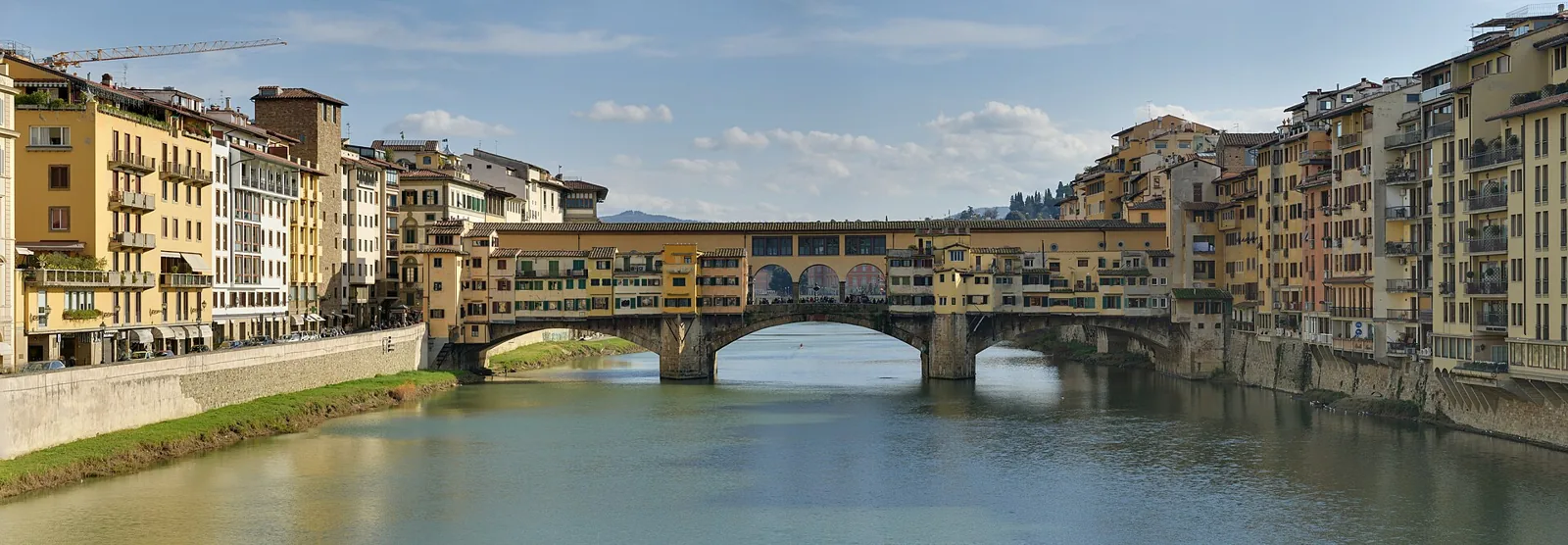
Photograph: Jan Drewes; Panorama of the Ponte Vecchio in Florence, Italy.jpg; CC BY-SA 4.0. Resized and converted to WebP. Genuine archival photograph, not a live view.
