Italy's railway map is being reshaped through several projects with different purposes and delivery stages. A tunnel breakthrough, a new section of track and a passenger timetable are related, but they are not interchangeable announcements. Understanding that distinction makes both project news and travel planning more useful.
The examples below are drawn from FS Italiane's official project information. Read dates as the context of a particular update, not a promise that every intended benefit is already available.
Naples–Bari: connecting across the south
The Naples–Bari high-speed/high-capacity programme aims to improve a major southern connection. It involves multiple sections and engineering works rather than a single station upgrade.
An official update on 5 May 2026 reported completion of excavation of the Rocchetta Tunnel on the Apice–Hirpinia section. That milestone describes tunnelling progress; it does not by itself establish end-to-end passenger operations on the new route.
Sicily: Palermo–Catania–Messina
FS describes a programme to improve connections between Sicily's principal cities, with passenger journey-time and infrastructure-capacity objectives. Its published benefits are tied to the completed system.
Travellers should not insert a future target journey time into today's itinerary. Search current services, including any work-related replacement transport, for the date and stations involved.
Genoa and the northern network
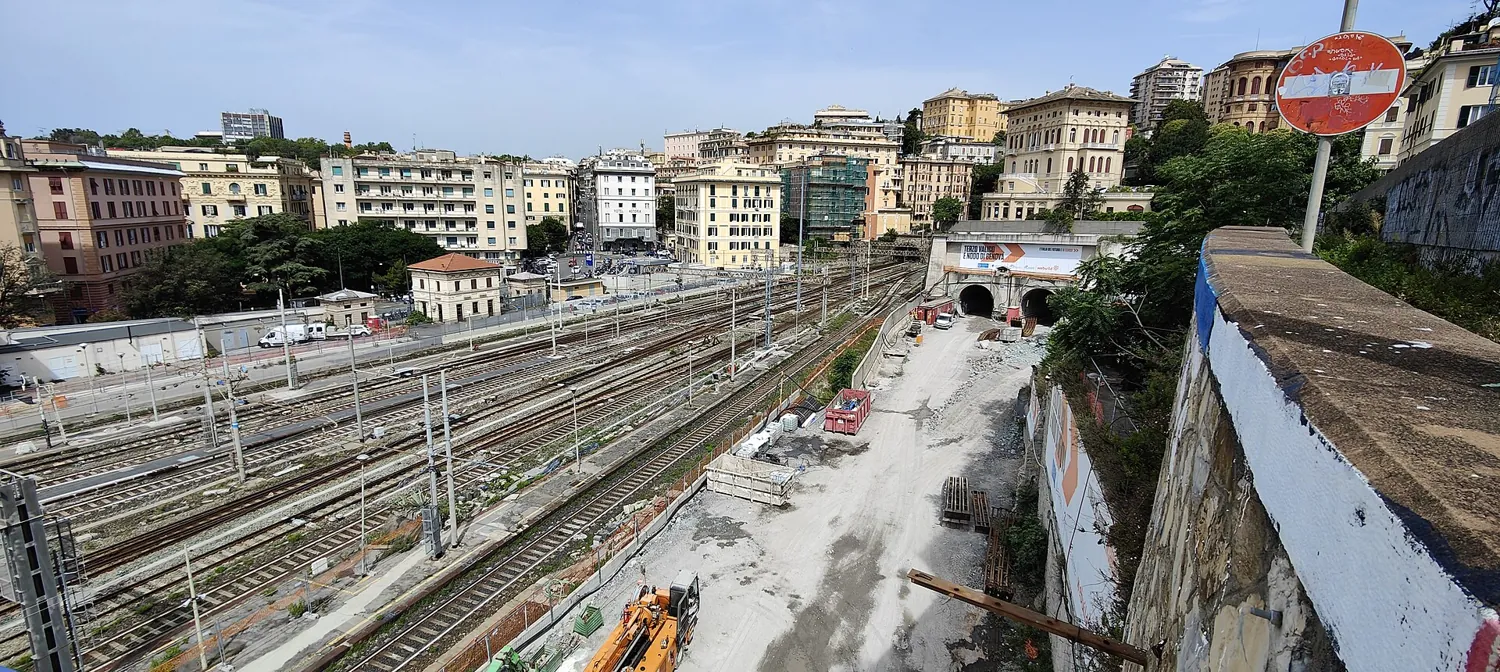
The Terzo Valico and Genoa node appear in FS's strategic-project collection. They belong to the wider question of how port, freight and passenger networks connect, not just how quickly a visitor reaches a city centre.
The photograph here is an archival view of construction near Genova Brignole, identified in its source as Terzo Valico works. It is not a live progress photograph of Naples or Sicily.
Why “activation” needs context
A project can be brought into use in stages. Infrastructure readiness, tests, safety permissions and the operator's service plan can follow different schedules.
Look for the named section in an announcement. A date attached to one part of a programme should not be presented as completion of the whole corridor.
What travellers should do
- Search your exact route and date in the train operator's current booking system.
- Read the station name, transfer and replacement-bus information carefully.
- Check whether connecting tickets are on the same booking and what protection applies.
- Keep a buffer before a flight, cruise departure or prepaid appointment.
Compare the full journey rather than a headline train speed. Reaching the departure station and continuing from the arrival station can matter as much as the time on board.
Follow projects responsibly
Use dated official updates for engineering context and current operator information for travel. Neither an old rendering nor a construction photograph can prove that a station is open to passengers.
If reporting a delay or opening, identify the source and the affected section. Avoid repeating a future date as a settled fact when the official project page is describing a target.
Common questions
Is every strategic project already complete?
No such assumption should be made from a national project list. Check each programme and section.
Will the improvements automatically make every ticket cheaper?
Infrastructure objectives do not guarantee a particular fare. Compare the actual services, booking conditions and total journey cost.
Continue planning Italy
- Plan a first trip to Italy
- Italy Explained: History, Regional Identity, Food and Local Traditions
- Colosseum Visitor Guide: Tickets, the Roman Forum and a Better Rome Day
- Sacred Italy in Assisi: Saint Francis, Art and a Respectful Pilgrim Visit
- Italy on a Budget: Rome’s Parks, Regional Food and Smarter Train Choices
- Italy Beyond the Main Circuit: Lucca, Ravenna and Regional Food Trails
- Business Setup in Italy: Registration, Self-Employment and Investor Residency
- How to Move to Italy Legally: Work, Study, Family and Digital Nomad Routes
- Luxury Italy: Lake Como, Milan Style and an Unhurried Amalfi Escape
Official sources and photograph credit
Reconfirm current rules, access and charges with the responsible official source before booking or applying.
- FS Italiane strategic projects
- Naples–Bari: dated Rocchetta Tunnel update
- Palermo–Catania–Messina project
- Trenitalia current journey planning
Photograph: Al*from*Lig; Staz. Brignole cantiere Terzo valico.jpg; CC BY-SA 4.0. Resized and converted to WebP. Genuine archival photograph, not a live view.
