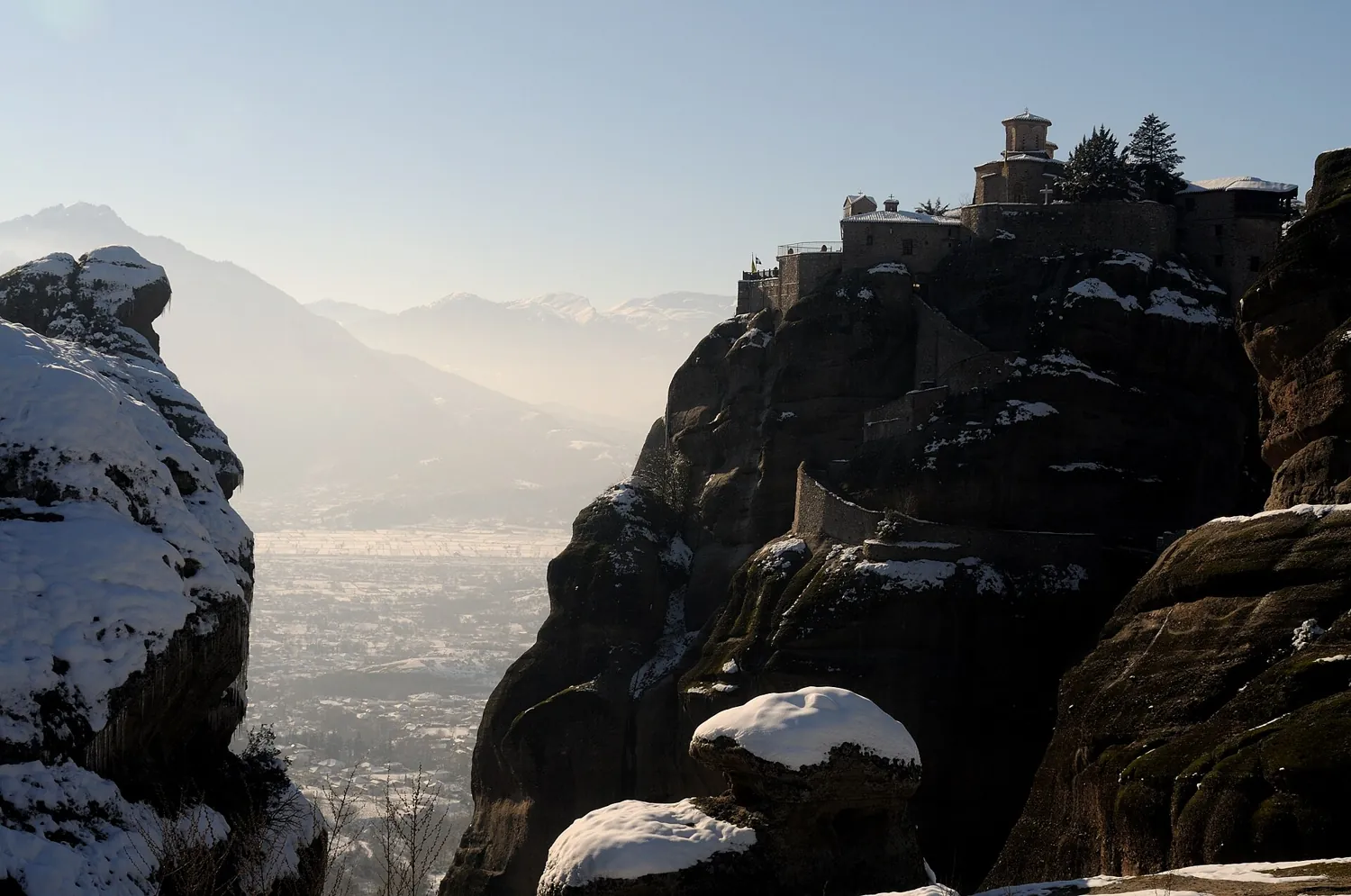
At Meteora, the landscape and the religious buildings make sense together. Monasteries set above steep rock formations express a search for retreat as well as an extraordinary response to difficult terrain. Visit with curiosity, but remember that sacred space has its own priorities.
Why the heritage matters
UNESCO recognises Meteora for its combined natural and cultural significance. Its account traces monastic settlement from the medieval period and highlights the importance of later religious painting.
You do not need specialist knowledge to appreciate the setting. A little historical context, however, helps distinguish a place of prayer from a dramatic viewpoint.
Choose a small number of visits
Do not turn the monasteries into a race. Choose the interiors you most want to understand and leave time for the approach, stairs and quiet observation.
Opening days can differ between institutions and seasons. Confirm arrangements with the monastery or responsible local information service before building an itinerary around a particular interior.
Dress and behave respectfully
Follow the specific clothing rules displayed at the entrance. Carry clothing suitable for covering shoulders and legs, and check whether a skirt or another particular garment is required rather than assuming clothing will be lent.
Keep voices low, silence phones and give worshippers room. If a service or restricted area changes what visitors can do, accept the boundary without argument.
Be realistic about access
Many approaches include steps, slopes and exposed ground. Ask for specific details if you have mobility limitations; a relatively easier entrance does not mean every room or route is step-free.
Wear secure footwear and allow more time than the map distance suggests. Rain, ice or heat can change how demanding a short walk feels.
Photography has limits
Outdoor viewpoints and religious interiors may have different rules. Read the signs and obtain permission when uncertain, especially around worshippers and sacred art.
Stay behind protective edges and use established paths. A photograph is not worth approaching an unprotected drop or trespassing on monastic grounds.
Arrange the local journey
Compare a local guided excursion with independent transport, including the return journey and waiting time. Ask whether admission, walking distances and accessibility support are actually included.
An overnight stay nearby can allow a calmer schedule. Do not promise yourself a complete mainland experience from a tightly timed excursion that spends most of its day travelling.
Budget honestly
- Confirm current admission separately for each chosen monastery.
- Add transport, guide charges and meals where applicable.
- Avoid treating a previous visitor's fee or timetable as universal.
Plan around conditions, not photographs
The accompanying genuine photograph shows winter snow in 2009; it does not report today's weather. Check the forecast and current access before travelling, and let the religious setting rather than social-media expectations determine the pace.
Continue planning Greece
- Plan a first trip to Greece
- Greece Beyond the Postcard: History, Regional Identity, Food and Festivals
- Acropolis of Athens: Tickets, Ancient Architecture and a Better Visitor Plan
- Athens Metro Line 4 Explained: Construction, Milestones and What Travellers Can Use
- Greece on a Budget: Athens Walks, Green Spaces and Smarter Travel Choices
- Beyond Greece’s Famous Islands: Nafplio, Ioannina and Regional Food Trails
- Business Setup in Greece: Company Registration, Costs and Investor Residence
- How to Move to Greece Legally: Work, Study, Family and Digital Nomad Routes
- Luxury Greece: Santorini Views, Athens Culture and Thoughtful Private Experiences
Official sources and photograph credit
Reconfirm current rules, access and charges with the responsible official source before booking or applying.
Photograph: Josep M. Gracia; Varlaam Monastery overlooking the snowy Meteora landscape, Greece, 2009.jpg; CC BY-SA 4.0. Resized and converted to WebP. Genuine archival photograph, not a live view.
