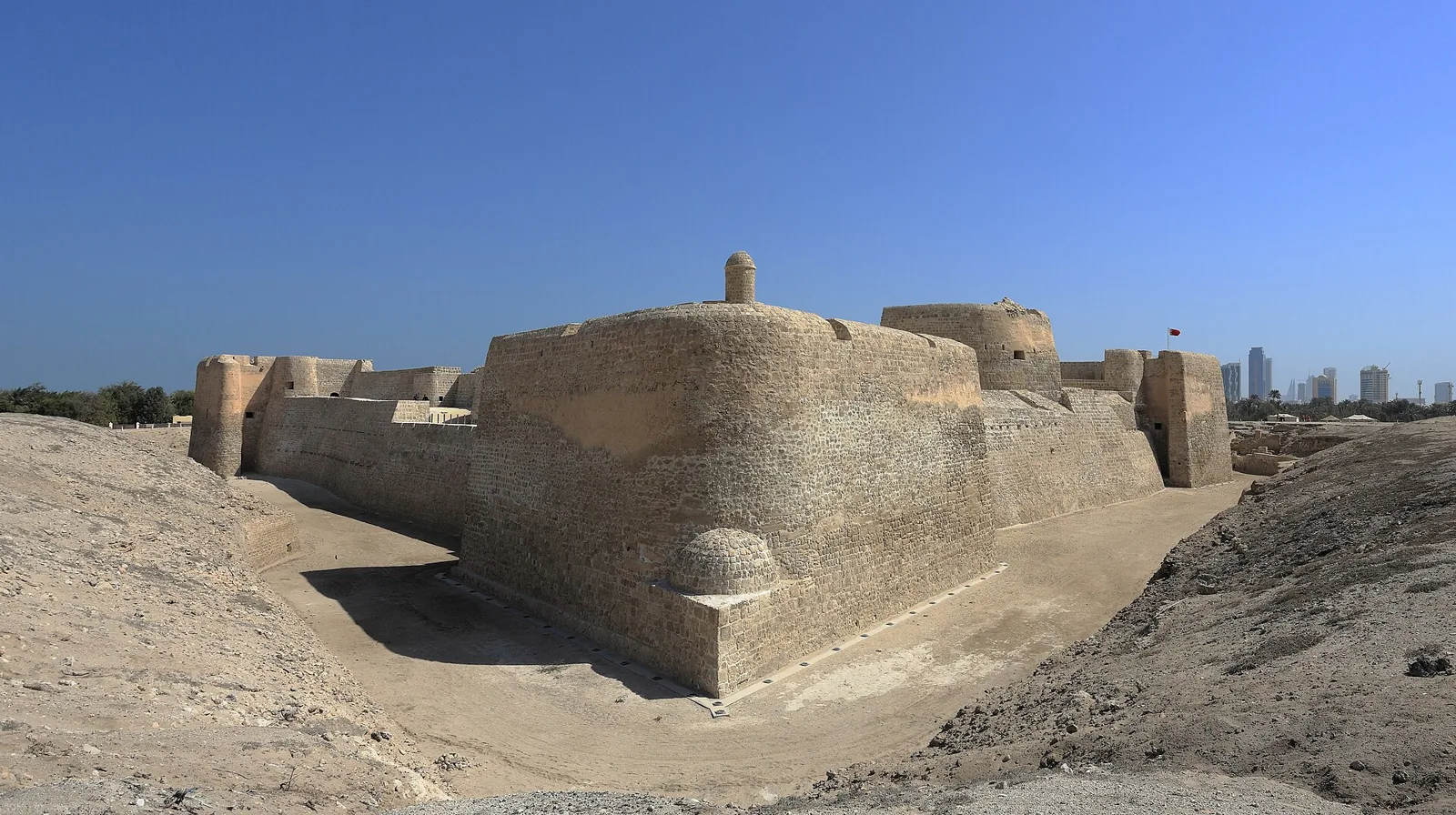
At Bahrain Fort, the sea, archaeological layers and surviving fortifications make more sense together than in a single cropped photograph. Plan a visit that connects the landscape with the museum and gives the site its historical depth.
What is Qal'at al-Bahrain?
The UNESCO property is Qal'at al-Bahrain—Ancient Harbour and Capital of Dilmun. The visible fort is one part of a much older archaeological landscape; calling the whole site merely a Portuguese fort misses earlier settlement and trade history.
UNESCO's inscription dates to 2005. Some tourism pages carry conflicting dates, so this guide follows UNESCO's own record for the listing year.
A useful order for the visit
We suggest starting with the site museum when open, using the displays to understand what you will see outside. Follow the authorised route through the fort and archaeological areas, then pause at a permitted coastal viewpoint.
Do not climb unstable remains or step beyond barriers to improve a photograph. Surviving ground levels and structures need protection even when a space appears empty.
Tickets, hours and accessibility
The museum, fort grounds, café and any special activity can have different operating arrangements. Check the Culture Authority or current visitor booking information for your exact date, ticket category and last admission.
Do not assume that a free exterior view includes museum entry, a guided tour or unrestricted evening access. Ask about uneven surfaces, steps, shade and accessible routes if anyone in your group needs support.
Photography without disrupting the site
- Choose early or later daylight for softer shadows and more comfortable walking.
- Keep public viewpoints and marked paths as your boundaries.
- Use a wider composition to show the relationship between fort and landscape.
- Ask permission for identifiable people; check separate rules for drones and professional shoots.
A photograph from the coast can provide useful context, but never enter restricted shoreline areas or construction zones. Weather, haze and lighting change the view, so avoid buying a tour solely for a promised exact photograph.
Transport and nearby planning
A licensed taxi or rental car offers flexibility; confirm the pickup point before leaving the vehicle. If using public transport, check the actual remaining walk and return service rather than assuming a route stops at the entrance.
Allow roughly two or three hours as a personal planning suggestion for museum, site and a break; interests, weather and operating hours may change the pace. Combine it with a modest nearby meal instead of crossing the island repeatedly.
Make the history part of your wider trip
The Bahrain country guide provides a timeline, while our hidden gems and food trail introduces Muharraq's different maritime heritage. Seeing both helps distinguish ancient Dilmun from the later pearling economy.
Sources and photograph credit
Information checked 26 October 2026. Fees, hours, eligibility and project status can change; confirm with the relevant official authority before paying or travelling.
Photograph: Martin Falbisoner; Bahrain Fort March 2015.JPG; CC BY-SA 4.0. Source-recorded date: 2015-03-11 11:09:01. Resized and converted to WebP for the web. Genuine photograph; not a live view or a claim of present-day conditions.
