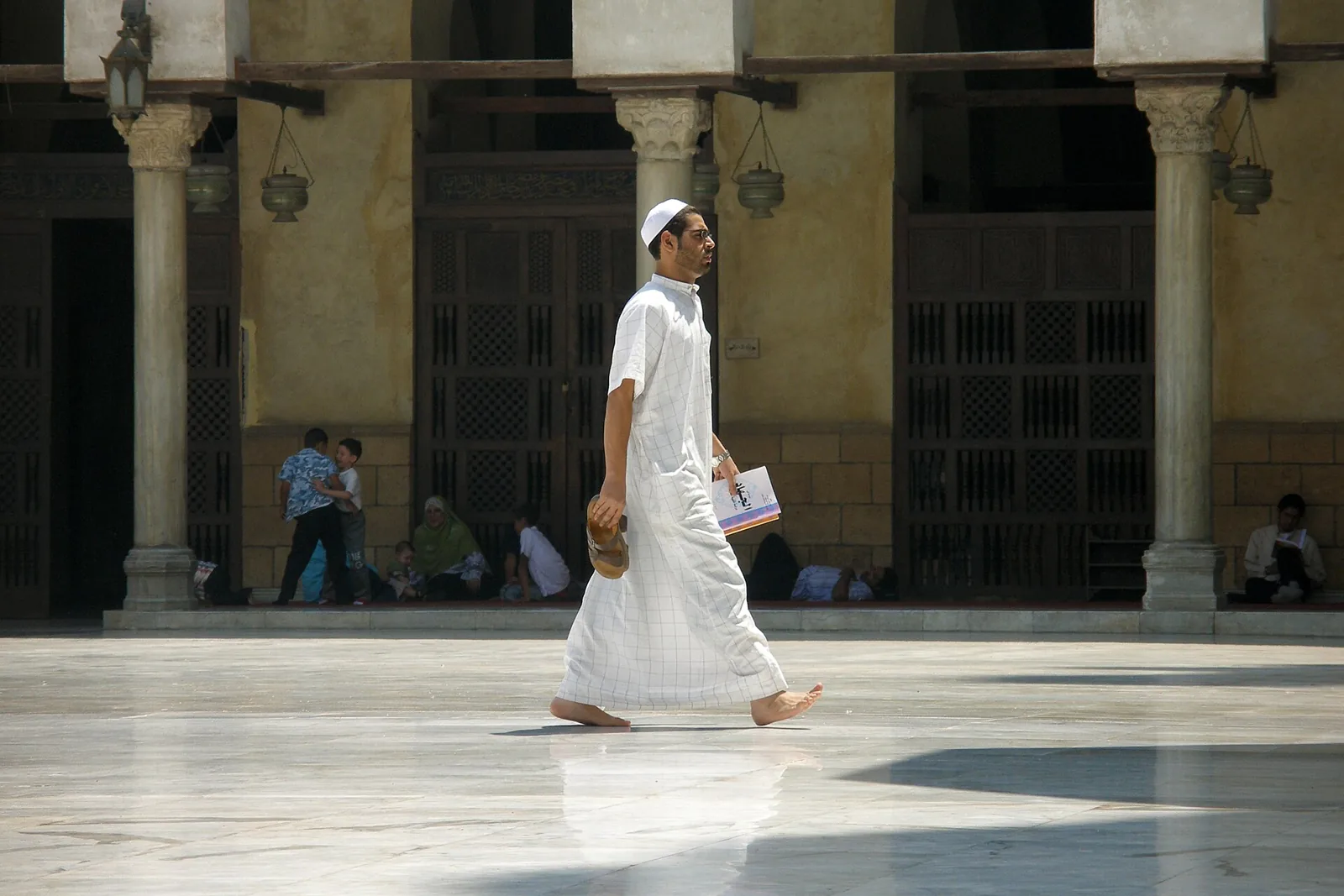
Cairo's sacred heritage is best understood through living communities rather than a race between photogenic buildings. Mosques, churches and historic religious institutions remain places of worship, learning and identity alongside their architectural importance.
Historic Cairo is more than one monument
Different districts preserve different periods of the city's religious and urban history. Islamic Cairo and the Coptic heritage area are not a single small pedestrian complex; allow transfer time and choose a manageable number of stops.
A knowledgeable local guide can explain the context without claiming every building follows the same rules. Ask whether the tour includes entry to interiors or only a walk past exteriors.
Al-Azhar Mosque
Al-Azhar is an important centre of Islamic religious and scholarly life as well as an architectural landmark. Courtyards, arcades and later additions reveal a building shaped across different periods.
Confirm current visitor access and avoid disrupting prayer or study. Wear modest clothing, follow instructions on footwear and photography, and ask before entering a space that is not clearly open to visitors.
Coptic Cairo
Churches associated with Egypt's Christian heritage offer another perspective on the city's history. The Hanging Church and nearby religious sites are meaningful to worshippers, not merely stops to complete before lunch.
Services, security arrangements and conservation can affect access. Be prepared to wait quietly, avoid flash where prohibited and keep passageways clear. A heritage story should distinguish religious tradition from an archaeological claim requiring evidence.
Museums and other places of worship
A museum visit can add context to what you see in religious buildings. Verify that it is included in your programme; church, mosque and museum opening times are not interchangeable.
If a tour includes a synagogue or another smaller religious site, confirm whether public access is actually permitted and whether advance coordination is needed. Never describe a locked or restricted site as a place to enter through an unofficial contact.
Dress, photographs and good manners
- Cover shoulders and knees and carry an additional light layer when requested.
- Follow each institution's footwear and head-covering arrangements.
- Silence phones and avoid photographing people praying without permission.
- Do not use a donation as a way to demand access.
- Ask before filming services, students or staff.
Rules can differ between a courtyard, a worship hall and a museum room. Staff directions on the day take precedence over a previous visitor's social-media post.
Planning a half-day or full day
Choose one district for a slower half-day. For a full day, include a proper break and realistic transport between Islamic and Coptic heritage areas rather than filling every gap with another building.
Religious holidays and Friday prayer may affect timings; check separately for each site. Ask about steps, seating and accessible toilets if travelling with older relatives or young children.
Costs and responsible guiding
Some worship spaces may have no standard general-admission charge, while museums, special interiors or guiding services may be paid. Confirm the current arrangement directly rather than promising that the whole route is free.
Agree the guide's fee, transport and included admissions in writing. Continue with our Egypt country guide and food trails to connect sacred heritage with the wider life of Cairo respectfully.
Sources and photograph credit
Information checked 28 October 2026. Fees, hours, eligibility and project status can change; confirm with the relevant official authority before paying or travelling.
Photograph: Vyacheslav Argenberg; The Courtyard of Al-Azhar Mosque, Cairo, Egypt.jpg; CC BY 4.0. Source-recorded date: 2007-06-15 14:25:07. Resized and converted to WebP for the web. Genuine photograph; not a live view or a claim of present-day conditions.
