Croatian company formation can be a useful commercial step, but it does not automatically give an international founder permission to live and work in Croatia. Assess the business and the person's immigration position together, while keeping the decisions distinct.
Begin with the actual activity
Define the product or service, customers, management role and premises. Check licensing or professional conditions before choosing the cheapest advertised legal form.
Ask an accountant about continuing obligations, not only incorporation. A business must remain workable after the registration certificate arrives.
Understand capital benchmarks
Official guidance distinguishes a standard d.o.o. limited liability company, with minimum capital of €2,500, from a simplified j.d.o.o. form that can start with €1 under its own restrictions.
Capital is not the complete setup fee. A €1 capital headline must not be presented as a €1 business, residence permit or all-inclusive relocation package.
Choose an eligible registration channel
Government information describes different registration methods, including digital and assisted services. Eligibility for a particular online process should be checked rather than assumed for every foreign founder.
Identification, tax numbers, legal documents and professional assistance can differ by structure and circumstances. Use the current instructions for the actual process selected.
Residence and work need separate attention
Share ownership, management and carrying out work can raise different legal questions. Confirm the relevant stay-and-work framework with MUP and qualified advisers before operating locally.
Do not copy an old kuna-denominated immigration threshold into a current package. Company capital and immigration conditions are separate even when both involve funding evidence.
Build an itemised budget
List registration, advice, notarial or translation costs where applicable. Add licensing, accounting, premises, insurance and ongoing payroll or social obligations.
Keep personal relocation, accommodation and any family application costs separate. Ask which official charges are included and which service fees are optional or recurring.
Tax is not an automatic exemption
Croatia should not be sold as a zero-tax business base for every founder. Obtain advice on corporate, VAT and personal tax residence in the circumstances of the business.
Banking checks are another process. Registration does not guarantee an immediate account or remove source-of-funds and identity questions.
Follow a sensible order
- Define the activity and founder's role.
- Check legal form, licences and immigration eligibility.
- Prepare capital, documents and a full fee budget.
- Complete the appropriate company and permit applications.
- Verify permission before beginning the intended work.
Before paying a package provider
Ask for written scope, exclusions, refund conditions and realistic uncertainties. This guide helps organise questions; it is not individual legal, tax or investment advice, and neither company registration nor a property purchase should be described as automatic citizenship.
Continue planning Croatia
- Plan a first trip to Croatia
- Croatia Beyond the Coast: History, Regional Culture and Food
- Plitvice Lakes: Seasonal Tickets, Walking Routes and Responsible Visiting
- Šibenik’s Cathedral of St James: Stone Architecture and Sacred Heritage
- Pelješac Bridge Explained: Engineering, Southern Croatia and Travel Planning
- Croatia on a Budget: Split Walks, Marjan and Smarter Seasonal Choices
- A Slower Varaždin: Old Town Heritage, Northern Streets and Local Food
- How to Move to Croatia: Work, Study, Family and Digital Nomad Residence
- Luxury Croatia: Dubrovnik Stays, Adriatic Boats and Slower Coastal Time
Official sources and photograph credit
Reconfirm current rules, access and charges with the responsible official source before booking or applying.
- Invest Croatia: legal forms and capital
- Government: starting a business
- Government: registration channels
- MUP: stay and work framework
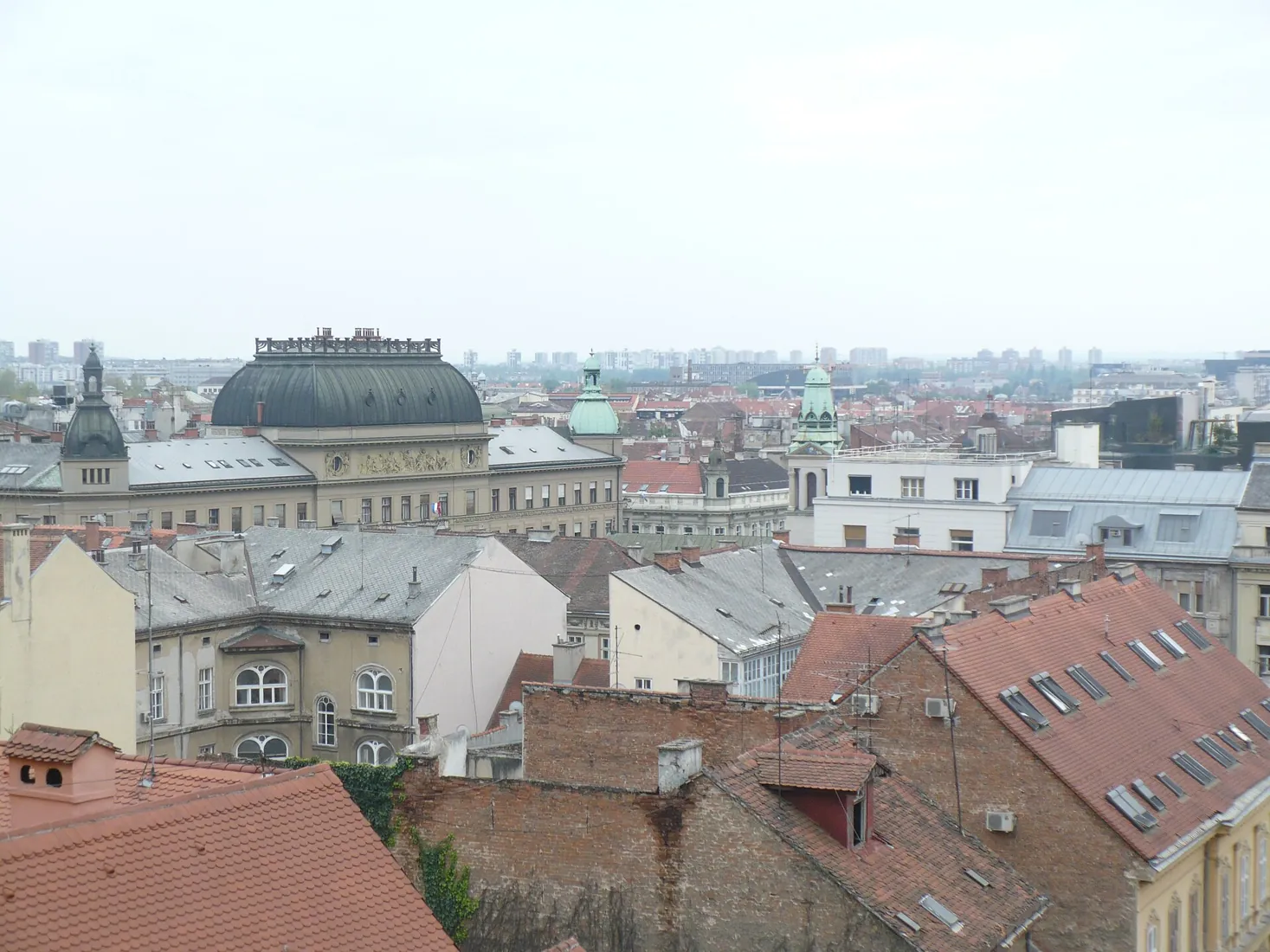
Photograph: Vikiçizer; Zagreb-38.JPG; CC BY-SA 4.0. Resized and converted to WebP. Genuine archival photograph, not a live view.
