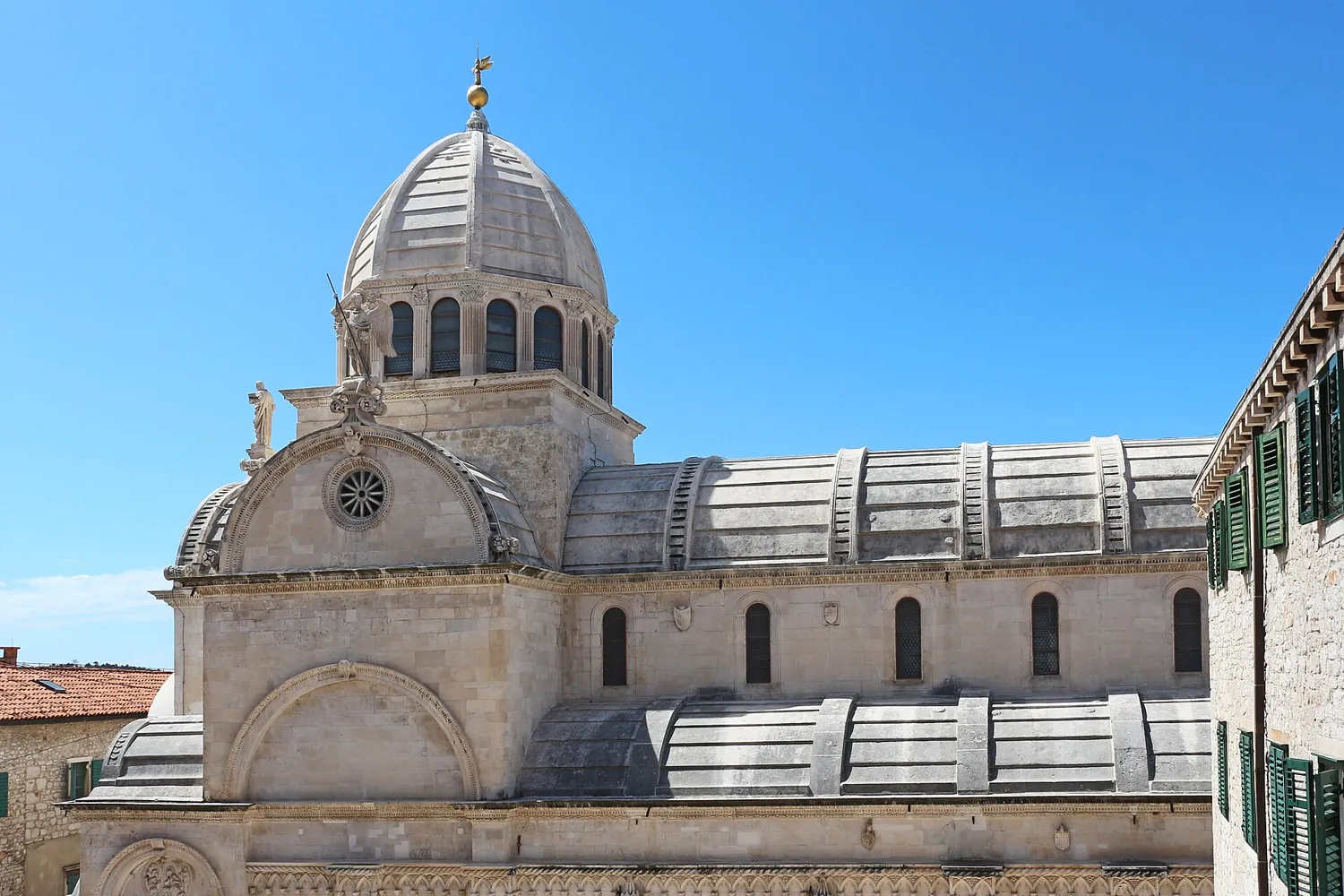
Šibenik's Cathedral of St James rewards attention to how stone becomes structure. Its façade and dome are not simply a handsome background; they belong to a religious and architectural story that deserves time and reliable interpretation.
Why the heritage matters
UNESCO describes the cathedral's construction between 1431 and 1535 and the exchange of artistic ideas across Dalmatia and Italian regions. Its stone construction and combination of Gothic and Renaissance elements are central to that account.
Use this context as a beginning, not a substitute for looking. Notice relationships between parts of the building rather than searching only for the most familiar photograph.
A church, not just an attraction
Religious activity takes priority over sightseeing. Keep voices low, wear suitable clothing and follow instructions if worship changes the areas available.
Do not assume that a paid visitor arrangement gives the right to interrupt a service. Wait, change the route or return at a suitable time when asked.
Check current access directly
Use the local tourism and cathedral visitor information for your actual day. Admission, guided interpretation and any nearby exhibition can have separate conditions.
Avoid repeating an old fee as universal. Check the visitor category, what the ticket includes and whether a particular interior is available before paying.
Look closely without touching
Stone details can be easier to understand with a guide or official description. Do not invent identities or meanings for decorative features because a story sounds plausible.
Keep hands away from fragile surfaces and respect conservation barriers. The survival of the details matters more than a pose beside them.
Photograph respectfully
Read the interior rules and ask when uncertain. Avoid flash or equipment where restricted and give people in prayer privacy.
Outside, keep the square and entrances clear. Do not block a working church doorway for a prolonged group photograph.
Plan the city around it
Combine the cathedral with an unhurried historic-centre walk and a meal. Narrow streets, steps and weather can affect the pace, so leave more than the time shown by a map.
If mobility is a concern, ask about the complete approach and entrance rather than assuming the exterior square explains the interior route.
A useful visitor checklist
- Confirm the current visiting period and any service.
- Compare standard entry and guided interpretation.
- Follow clothing and photography instructions.
- Allow time for the wider city and return journey.
Take context away
The best visit connects craft, faith and the city that surrounds the cathedral. A little preparation lets you appreciate those connections without turning a living sacred place into a rushed stop.
Continue planning Croatia
- Plan a first trip to Croatia
- Croatia Beyond the Coast: History, Regional Culture and Food
- Plitvice Lakes: Seasonal Tickets, Walking Routes and Responsible Visiting
- Pelješac Bridge Explained: Engineering, Southern Croatia and Travel Planning
- Croatia on a Budget: Split Walks, Marjan and Smarter Seasonal Choices
- A Slower Varaždin: Old Town Heritage, Northern Streets and Local Food
- Croatia Business Setup: Company Capital, Registration and Residence
- How to Move to Croatia: Work, Study, Family and Digital Nomad Residence
- Luxury Croatia: Dubrovnik Stays, Adriatic Boats and Slower Coastal Time
Official sources and photograph credit
Reconfirm current rules, access and charges with the responsible official source before booking or applying.
Photograph: Bernard Gagnon; Cathedral of St. James, Šibenik 01.jpg; CC BY-SA 4.0. Resized and converted to WebP. Genuine archival photograph, not a live view.
