Türkiye's appeal as a place to live does not make every long stay straightforward. Start by separating entry permission, residence permission and permission to work, then choose the route that matches your real circumstances.
Short-term entry
Visa exemptions and eVisa eligibility depend on passport, purpose and supporting conditions. Use the Foreign Ministry and official eVisa system; a residence card from another country does not automatically remove Türkiye's requirements.
Check permitted stay as well as visa validity. A multiple-entry visa can still impose a limit on the days you may remain, and tourist entry is not a general work authorisation.
Employment
An eligible job normally requires the applicable work-permit process. Domestic and overseas application routes differ; the employer and applicant should confirm the documents and sequence before travel.
A valid work permit can serve as the lawful basis to reside under the relevant rules. Do not begin work on the assumption that any residence card is sufficient.
Family and study
Qualifying family members may apply under the family-residence framework, while students use the category linked to their education. Relationship documents, financial support, insurance, address and institution evidence depend on the case.
A dependent or student status should not be described as unrestricted employment permission. Confirm any separate work eligibility with the appropriate authority.
Business, property and longer-term options
Business connections and qualifying residential property can be grounds within the short-term residence framework, subject to current conditions and approval. A lease or property purchase alone does not guarantee acceptance, and address restrictions or valuation rules may matter.
Long-term residence has its own eligibility and continuity assessment. Exceptional investment and citizenship programmes are distinct from ordinary residence; obtain current legal advice before transferring money.
Digital nomad pathway
Türkiye has an official digital-nomad identification and visa process for specified eligible nationalities and applicants meeting age, education, overseas-work and income conditions. The identification certificate is a step toward the visa application, not automatic residence or permission to work for any Turkish client.
GoTürkiye’s criteria checked on 7 November 2026 specify ages 21–55, a university qualification, work for a business outside Türkiye and income of USD 3,000 monthly or USD 36,000 annually. The published nationality list does not include India. Check that list and all documentary conditions before planning around this route.
A practical preparation sequence
- Check the correct entry and long-stay category before booking.
- Organise passports, photographs and route-specific supporting records.
- Use the official e-İkamet or work-permit process as applicable.
- Attend required appointments, maintain lawful status and confirm address and insurance obligations.
- Track renewals and changes in employment, study or family circumstances.
Plan the cost of living and compliance
Budget temporary housing, deposits, insurance, translations, official fees and tax advice. Immigration residence and tax residence are different tests; working for foreign clients does not automatically eliminate local tax obligations.
See our business setup guide and country introduction before making a long-term commitment. This is general planning information, not a personalised eligibility decision.
Sources and photograph credit
Material facts reviewed 7 November 2026. Check the linked transport, visitor and entry sources for your own dates; an archival photograph does not establish current access.
- Foreign Ministry entry rules
- Official eVisa
- Migration Management residence types
- Official e-İkamet
- Work-permit guide
- Digital nomad requirements
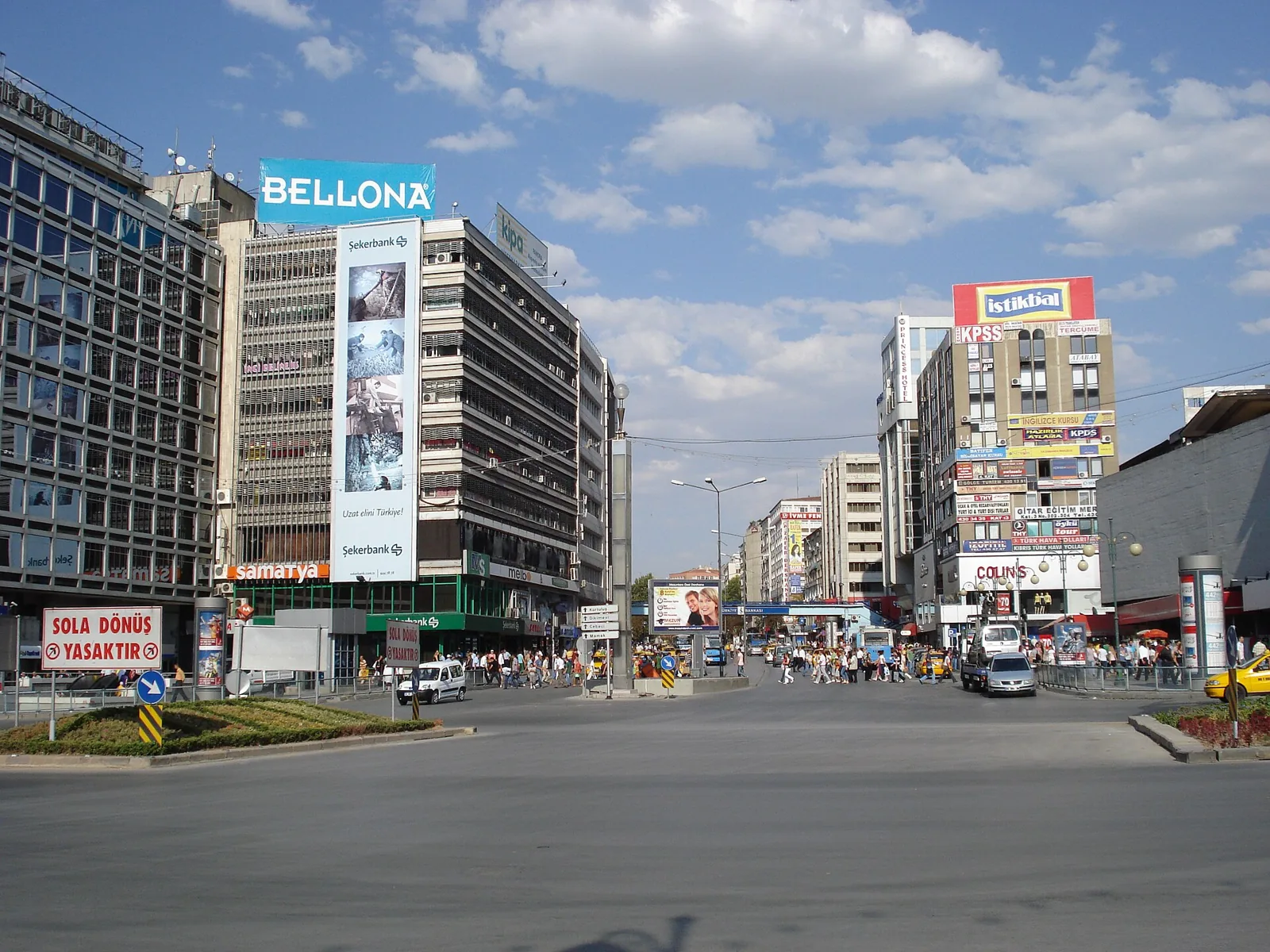
Photograph: Traffic and buildings in Kizilay Square in Ankara. Yabancı / Wikimedia Commons; CC BY-SA 3.0. Source-recorded photograph date: 2008-08-19 15:59:50. Resized and converted to WebP. Real photograph from the stated source date; not a live view.
