Dutch water engineering becomes more interesting when it is understood as a continuing responsibility rather than a finished miracle. The Oosterschelde barrier is an operating part of the Delta Works, with design choices that connect flood protection and the estuary's environment.
This is operating infrastructure
The barrier was built between 1976 and 1986. It should not be described as a newly opening 2026 mega-project simply because current anniversaries or maintenance generate news.
Rijkswaterstaat's project information explains its role and operation. Read current notices separately if you need to know about access or work on a particular day.
What makes the design different?
Rather than a permanently closed solid dam, the movable structure normally allows tidal exchange. Gates can be closed when exceptionally high water threatens.
That distinction matters to understanding the project. A visitor should not assume that a barrier photograph shows the gates in their flood-defence position or that they close for a tourist demonstration.
Engineering involves choices
Flood protection and the estuary's natural and economic functions had to be considered together. The design is a way of managing a relationship with water, not removing that relationship.
Avoid suggesting that any structure eliminates every future flood risk. Operation, forecasts, inspection and maintenance remain important after construction ends.
Look for the human story
The wider Delta Works followed the devastating 1953 flood. A museum or responsible interpretation can connect the engineering to communities and decisions rather than only to impressive dimensions.
Give that history respectful attention. A disaster-related site is not just a backdrop for an adventurous photograph.
Plan a visit through the right operator
Check whether your chosen visitor centre, museum or guided experience is open and what its ticket includes. Public views and controlled operational spaces have different access rules.
Do not assume that a road crossing gives permission to enter maintenance areas or control facilities. Follow current signs and staff instructions.
Transport and weather matter
This is a different outing from a compact Amsterdam museum day. Compare the real return journey, local connections and walking distance before committing.
Coastal wind and rain can change comfort and safety. Use current local information and do not approach exposed edges for a preferred angle.
Read photographs with their dates
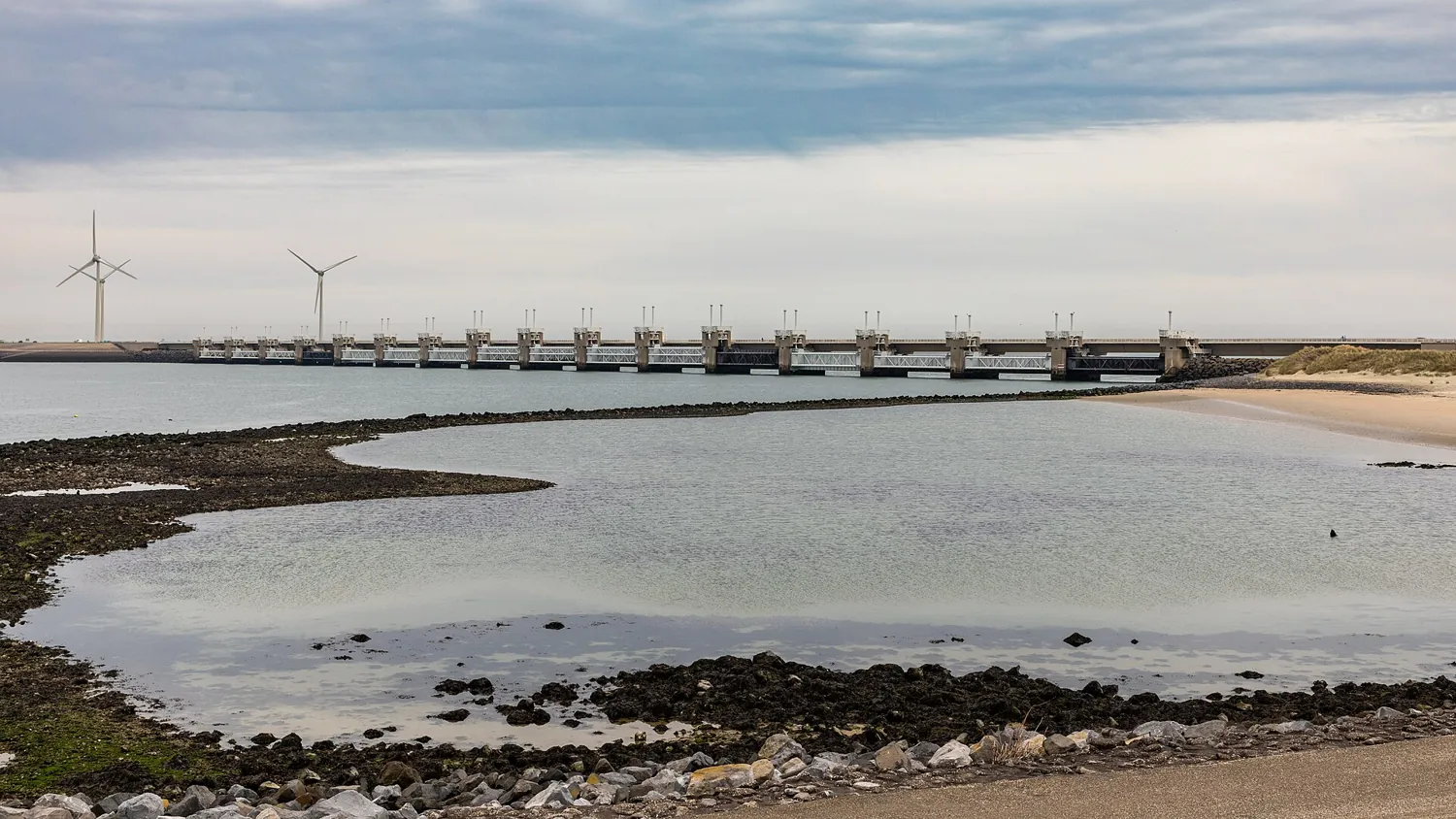
Our genuine photograph records a 2022 shore view. It explains the setting but is not a live operational report or evidence of today's access conditions.
A better way to follow infrastructure
- Distinguish original construction from current operation.
- Separate visitor facilities from restricted engineering space.
- Ask how safety and environmental needs interact.
- Use current authority notices for travel decisions.
The result is an informed visit to a working system, rather than a claim that engineering has made nature irrelevant.
Continue planning Netherlands
- Plan a first trip to Netherlands
- The Netherlands Beyond Amsterdam: Water, History, Food and Regional Life
- Rijksmuseum Amsterdam: Tickets, Art and a Visit That Leaves Time to Look
- Utrecht’s Domkerk: Sacred Heritage, Cathedral Square and a Respectful Visit
- The Netherlands on a Budget: Amsterdam Walks, Vondelpark and Smarter Tickets
- A Slower Haarlem: Grote Markt, Historic Streets and Local Food Stops
- Netherlands Business Setup: Startup and Self-Employed Residence Explained
- How to Move to the Netherlands: Legal Work, Study, Family and Founder Routes
- Luxury Netherlands: Amsterdam Stays, Private Culture and Waterway Experiences
Official sources and photograph credit
Reconfirm current rules, access and charges with the responsible official source before booking or applying.
- Rijkswaterstaat: Eastern Scheldt barrier design and operation
- Rijkswaterstaat: forty-year anniversary context
- Zeeland official visitor information: Delta Works
Photograph: Dietmar Rabich; Vrouwenpolder (NL), Oosterscheldekering — 2022 — 5016.jpg; CC BY-SA 4.0. Resized and converted to WebP. Genuine archival photograph, not a live view.
