Portugal's planned high-speed railway between Porto and Lisbon is a major transport story, but it should not be described as an already operating shortcut. Project stages, construction contracts and future journey targets answer different questions from today's train timetable.
What changed in October 2026?
On 12 October 2026, Infraestruturas de Portugal announced the start of works for the Porto-Campanhã–Oiã first concession section. That is a construction milestone for part of a future railway.
It does not mean passengers can already buy the eventual end-to-end high-speed product. Check which stage an announcement concerns before applying it to a trip.
Understand the first section
The authority describes approximately 71 kilometres of new railway in this concession, designed for speeds up to 300 km/h. Tunnels, bridges, viaducts and connections form part of the scheme.
Those are infrastructure specifications. They do not describe the speed of every future train over the entire Lisbon–Porto journey or a guarantee of a particular service pattern.
Why the wider project matters
The stated ambition includes reducing journey times between the major cities and releasing capacity on the existing network for other services. A new line can affect regional, suburban and freight operations as well as intercity passengers.
The outcome depends on the wider programme and its operation. Benefits in a project case should not be presented as completed results.
Targets need a date
The overall direct-journey ambition of about 1 hour 15 minutes belongs to the future project. It is not today's travel time and should not be used to build a current connection.
Completion forecasts and phases can change. A target for one section is also not automatically the opening date for the complete route.
Book current trains separately
Use Comboios de Portugal for actual services, fares, stations and notices. Compare the departure and arrival station names rather than assuming every city-centre stop is the same.
Leave a sensible margin after a flight or before an important onward connection. The future railway does not remove today's transfer requirements.
Travelling near works
If a station or road is affected, use current passenger notices and local directions. Ask a hotel or transfer provider about the exact access route if luggage or mobility is a concern.
Do not enter a construction zone for a photograph. Official project updates provide safer context than approaching active machinery or barriers.
Read the image correctly
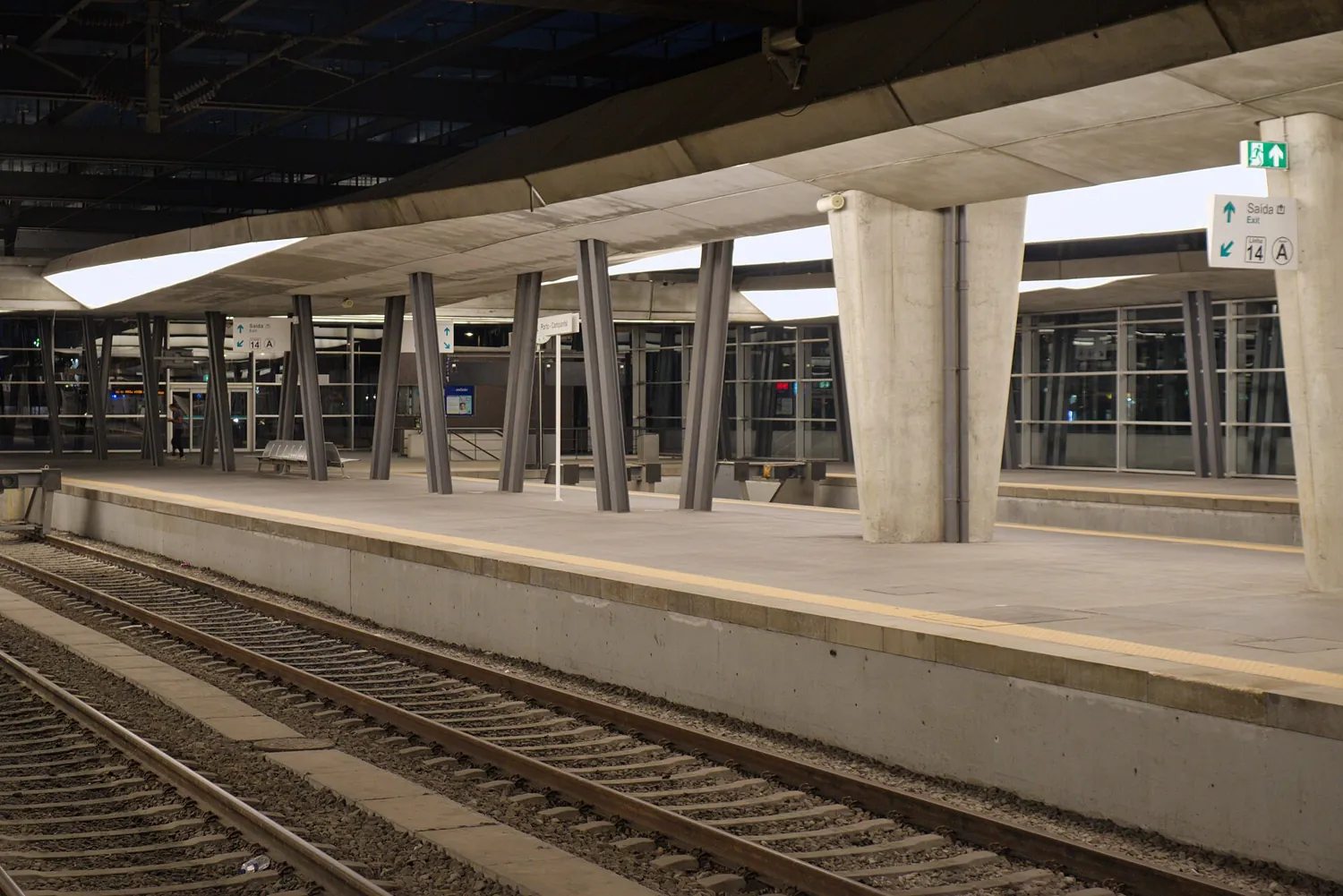
The accompanying photograph shows Porto-Campanhã platforms in August 2025. It illustrates an existing railway setting, not a new high-speed construction site or an operating future service.
A reliable planning habit
- Separate announced, under-construction and operating stages.
- Read the date and section named in an update.
- Book from the current operator's timetable.
- Recheck the network when a future journey becomes real.
This approach lets you follow a significant investment without turning a promising plan into inaccurate travel advice.
Continue planning Portugal
- Plan a first trip to Portugal
- Portugal Beyond the Viewpoint: History, Food and Regional Identity
- Pena Palace in Sintra: Ticket Choices, Hilltop Access and a Better Visit
- Jerónimos Monastery: Lisbon’s Sacred Heritage, Cloisters and Visitor Planning
- Portugal on a Budget: Lisbon Walks, Garden Breaks and Smarter Spending
- A Slower Coimbra: University Heritage, Historic Streets and Local Food
- Portugal Business Setup: Company Formation, Entrepreneur Visas and Real Costs
- How to Move to Portugal Legally: Work, Study, Family and Remote Work
- Luxury Portugal: Lisbon Culture, Porto Stays and a Slower Douro Escape
Official sources and photograph credit
Reconfirm current rules, access and charges with the responsible official source before booking or applying.
- IP: 12 October 2026 construction announcement
- IP: high-speed network programme
- Comboios de Portugal: current services
Photograph: Patrycja Rosa (ptrcnull); 2025-08-04, Platforms at Porto-Campanhã at night.jpg; CC BY 4.0. Resized and converted to WebP. Genuine archival photograph, not a live view.
