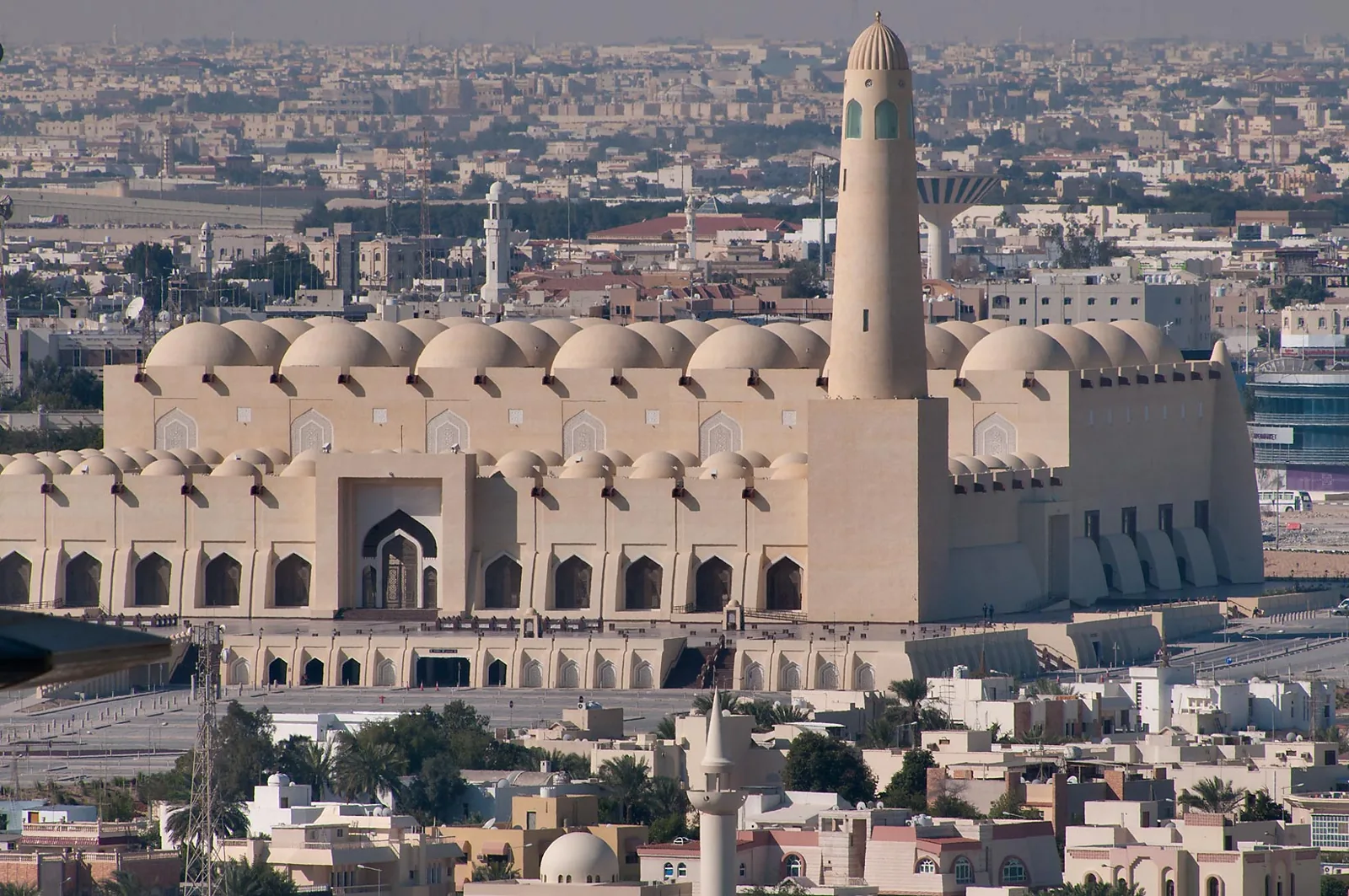
Doha's State Mosque offers a different rhythm from the city's shopping streets and waterfront promenades. Its broad courtyard, repeated arches and restrained forms are best appreciated with time, quiet and respect for the people who worship here.
Understand the place before visiting
The mosque is commonly called the State Mosque or Imam Muhammad ibn Abd al-Wahhab Mosque. It is a functioning place of worship, not a museum with guaranteed sightseeing access throughout the day.
For Muslim visitors, prayer and religious observance take priority. Non-Muslim visitors should confirm the current arrangements for access or a guided cultural visit with the mosque or the official Islamic cultural centre before travelling.
Architecture to notice
Look at how the large exterior spaces, low repeated domes and arches create a sense of scale without relying on a glass-tower silhouette. Observe from permitted public areas; the best photograph is not worth blocking an entrance or interrupting prayer.
The exterior can be especially attractive in softer light. Sunset, however, can coincide with prayer activity, so choose your viewing position with care and follow staff direction.
Plan access, timing and transport
- Confirm visitor access and any tour registration directly; do not assume walk-in interior entry.
- Avoid arriving for sightseeing during busy prayer periods, particularly Friday congregational prayer.
- Use a licensed taxi and arrange a clear pickup point; do not depend on a taxi waiting without agreement.
- Ask about step-free access, walking distances and visitor facilities if these affect your visit.
No universal sightseeing fee or fixed public tour timetable is promised here. Check the current arrangement rather than paying an unofficial intermediary who claims guaranteed entry.
Dress and conduct
Choose loose, modest clothing covering shoulders and legs. Women should carry a headscarf for any interior access; follow the mosque's specific instructions rather than assuming rules from another destination apply unchanged.
Remove shoes where directed, keep voices low and silence phones. Never walk directly in front of someone praying, enter restricted areas or use worshippers as photographic subjects without permission.
Combine spirituality with cultural understanding
A cultural-centre visit can provide context about Islamic practice and Qatari hospitality, particularly if an interior mosque visit is unavailable. Keep questions respectful and allow the host to explain local customs.
Pair this stop with a relaxed cultural afternoon rather than a tightly packed sightseeing race. Our Qatar country guide introduces traditions, and the Museum of Islamic Art guide offers another perspective on artistic heritage.
Before you leave
Check that you have your shoes and belongings, dispose of litter responsibly and use the agreed exit. A successful visit is one in which visitors learn something while the mosque's religious life continues undisturbed.
Sources and photograph credit
Information checked 26 October 2026. Fees, hours, eligibility and project status can change; confirm with the relevant official authority before paying or travelling.
Photograph: Alex Sergeev (www.asergeev.com); View of Lejbailat and State Mosque.jpg; CC BY-SA 3.0. Source-recorded date: 2011-02-11. Resized and converted to WebP for the web. Genuine photograph; not a live view or a claim of present-day conditions.
