Msheireb and Lusail offer two useful starting points for understanding Qatar’s urban development. In central Doha, look at the relationship between heritage buildings, shaded streets and the tram. In Lusail, choose a named public district or promenade and check its current access before travelling.
What Vision 2030 actually means
The vision rests on human, social, economic and environmental development. It is a national direction implemented through strategies and individual programmes, not a single construction contract or a promise that every announced project will finish in 2030.
For travellers, the most useful question is which places are open and accessible. For businesses, it is which opportunities have an active procurement or investment process.
Lusail: a city with different stages of delivery
Lusail combines residential districts, offices, retail, entertainment and waterfront public spaces north of central Doha. The marina and selected public areas can be part of a visitor itinerary, while other plots remain private, occupied or under development.
Treat the masterplan, an individual building and a ticketed attraction as separate things. Check the operator of the exact venue before travelling; an impressive rendering does not establish public access.
Msheireb Downtown Doha: regeneration at a human scale
Msheireb is a central district where heritage, contemporary buildings and shaded streets meet. A walking visit offers a useful way to examine how urban regeneration works beyond headline towers.
Connect a visit with nearby Souq Waqif, allowing time for heat, dining and museum opening arrangements. Commercial properties and residences should not be treated as public viewing areas.
Transport, knowledge and economic infrastructure
The metro and tram support movement around selected urban corridors. Education, research and cultural institutions are equally important parts of the country's development ambitions, alongside ports, logistics and energy investment.
Do not confuse completed infrastructure with proposed extensions. Use the current network map and operator notices, rather than an old future-system map, to plan a journey.
How to follow projects responsibly
- Identify the developer and the specific phase, not just the project brand.
- Separate announced, tendered, under-construction and operational status.
- Check the date of each update and whether it describes an aspiration or a delivered facility.
- Investors should review legal structure, contracts and commercial demand; no project guarantees a return.
A suggested development-themed day
Start with central Doha and Msheireb, then travel to a public Lusail waterfront area later in the day. This contrast helps explain regeneration and outward growth without trying to enter construction sites.
For the wider destination, see our Qatar country guide. Entrepreneurs can compare the licensing routes in our Qatar business guide; national development goals do not replace company approvals or immigration requirements.
Sources and photograph credit
Information checked 5 November 2026. Fees, hours, eligibility and project status can change; confirm with the relevant official authority before paying or travelling.
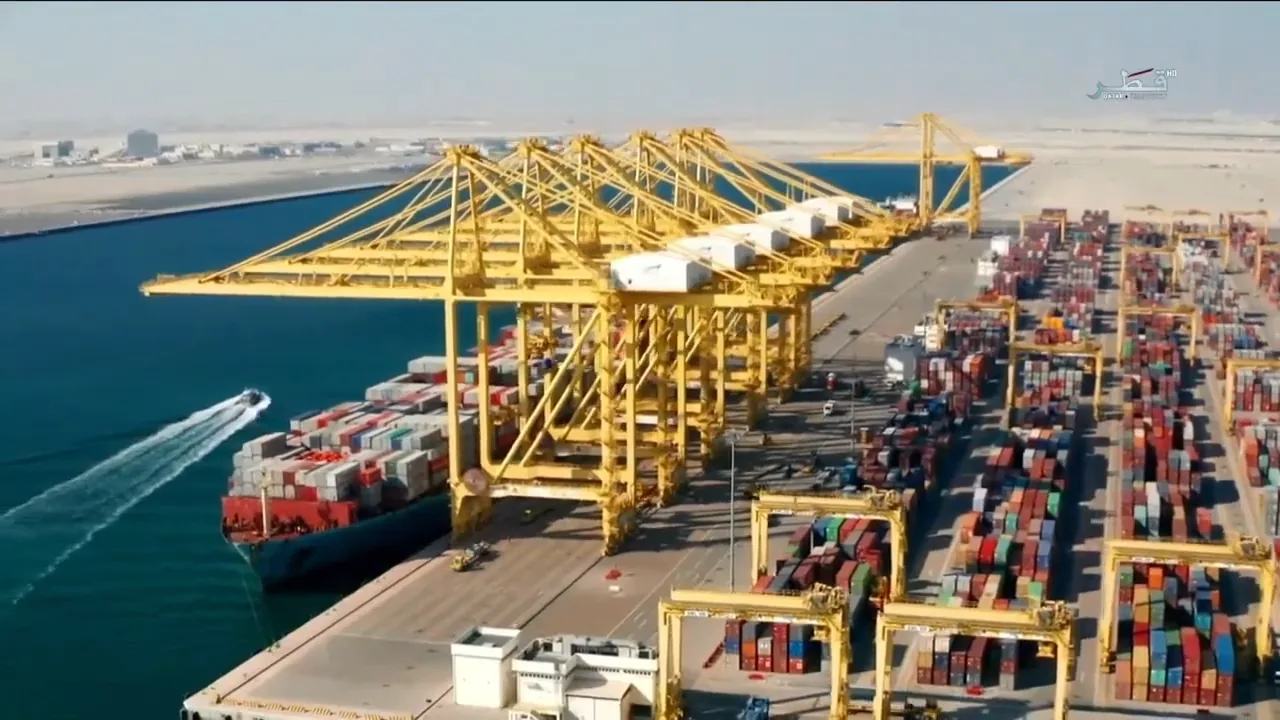
Video still: Container cranes and cargo facilities at Hamad Port in Qatar. Ministry of Transport (MOT) Qatar @ YouTube / Wikimedia Commons; CC BY 3.0. Source-recorded photograph date: 2023-08-06. Resized and converted to WebP. Still from the Ministry of Transport video at 1:05; the source record dates the video to 6 August 2023. This is not a live port view.
