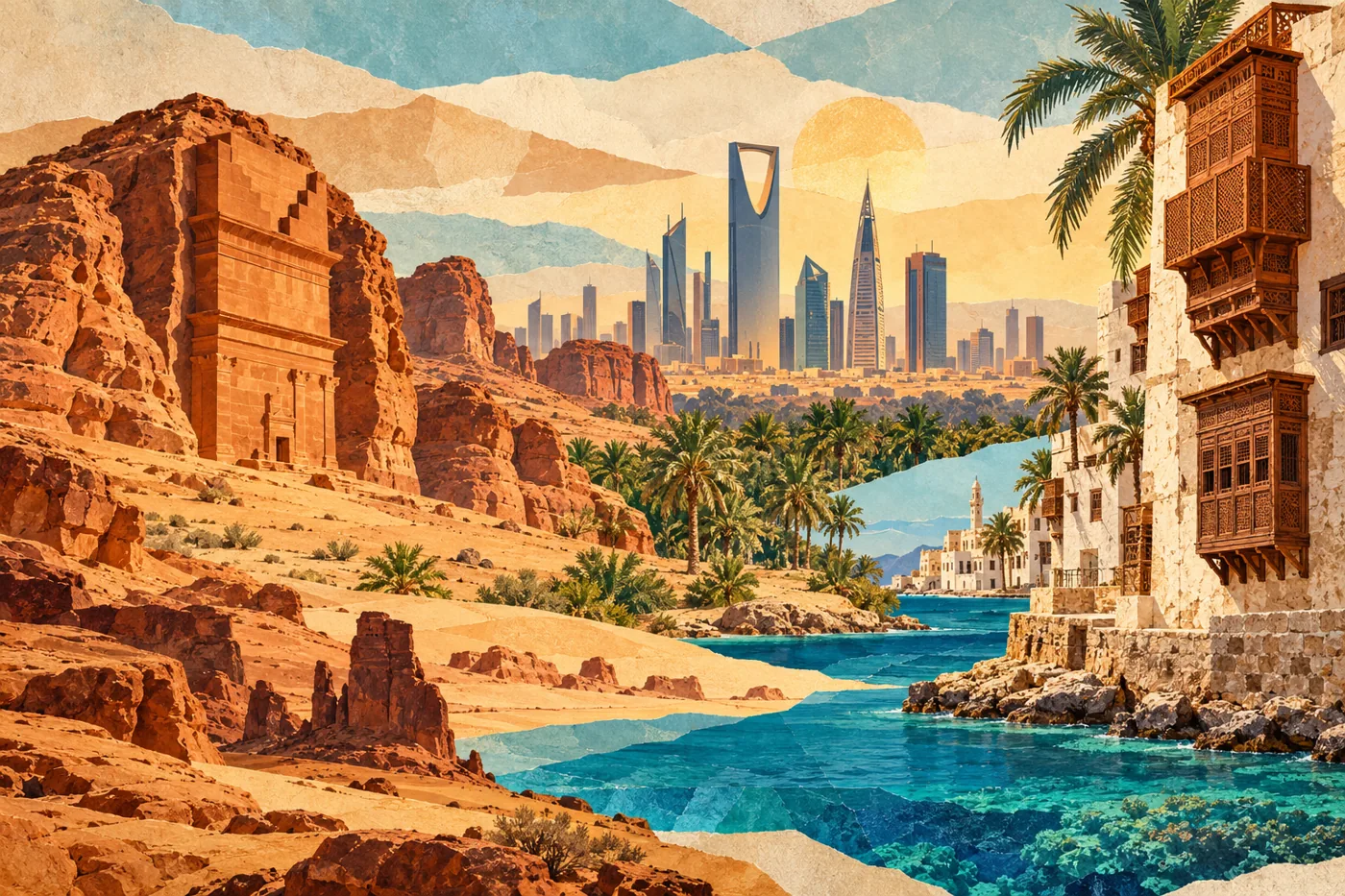
Saudi Arabia’s opening to international leisure tourism has put extraordinary journeys within reach—but the country is too large for a first trip built entirely from social-media saves. The best places to visit in Saudi Arabia are the ones you can connect comfortably, with enough time to understand what you are seeing.
1. See Hegra with a guide
Among AlUla attractions, Hegra stands out for the craftsmanship of its Nabataean tomb façades and the surrounding sandstone landscape. Book through the official destination platform and follow the meeting point on your actual ticket.
Give the experience a dedicated half-day including transfers, rather than treating it as a quick roadside stop. Early or later departures can make the outdoor sections more comfortable.
2. Slow down in AlUla’s Old Town and oasis
Balance a major archaeological visit with time in the Old Town and an authorised oasis experience. The contrast between cultivated land, settlement and desert is easier to appreciate when you leave room to walk and listen.
Check which routes are public and which require a booked tour, and do not enter private farms. This is an opportunity to understand a living landscape rather than collect another distant photograph.
3. Walk through At-Turaif in Diriyah
For historical things to do in Riyadh, begin with the nearby heritage district of At-Turaif. Its earthen buildings connect the capital’s modern skyline with an earlier Saudi political and architectural story.
Confirm the current access pass and choose late afternoon if the programme allows. Keep dining reservations and heritage entry separate in your budget.
4. Compare Riyadh from above and at street level
Visit Kingdom Centre’s Sky Bridge on a clear day, then spend an evening at Boulevard City if its current programme suits you. Together they show different sides of the capital: urban scale and contemporary entertainment.
Read the ticket and event conditions rather than assuming every activity in a district is included. Boulevard City and Boulevard World are separate places with their own access arrangements.
5. Explore Al-Balad with local context
Historic streets, coral-stone houses and wooden roshan windows make Al-Balad central to Jeddah tourism. A knowledgeable guide can connect the façades with trade, pilgrimage routes and the families who lived there.
Go from late afternoon into evening and expect some buildings to be under restoration. Ask before photographing people and do not step into a doorway simply because it makes a good composition.
6. Give Jeddah’s waterfront an unhurried evening
A Corniche walk is a useful counterpoint to a structured heritage tour. Choose one accessible section, enjoy the sea air and let dinner be part of the evening rather than another transfer across the city.
Follow posted rules for swimming and public space. Waterfront access does not mean every hotel beach or marine attraction is public or free.
7. Share a Saudi meal and coffee
Try a kabsa platter with your group, sample a regional dish and finish with coffee and dates. Ask the restaurant about portions and its own specialities rather than ordering from a generic list of “must-eat” dishes.
Our Saudi food and hidden-gems guide explains where saleeg, mountain villages and slower culinary stops fit into a trip. Tell staff about allergies and use current menu prices as your guide.
8. Choose one guided desert or escarpment outing
An excursion to the Edge of the World can add a dramatic outdoor day to a Riyadh stay. Select an operator who confirms the legal access route, weather plan, vehicle and included transfers.
Stay away from unprotected drops and never let a sunset photograph delay a safe return. If conditions are poor, replace the outing with an urban visit rather than forcing the itinerary.
9. Add Asir when mountains are your priority
Abha’s highland setting, regional heritage and nearby villages such as Rijal Almaa make Asir a compelling extra region. Add it when you have the days and transport to explore, not as a rushed side trip between two distant flights.
Plan around mountain weather and use local guidance for unfamiliar walking routes. Distances, fog and winding roads can make a short line on a map a much longer journey.
10. Choose your Red Sea experience deliberately
Jeddah or Yanbu can work for licensed boat and dive outings, while the purpose-built Red Sea destination suits a resort-focused stay. Compare sea conditions, qualifications, transfer logistics and the full price before choosing.
Check that a resort is operating on your dates rather than booking around a future-development image. Protect marine life: do not touch coral, chase wildlife or assume every coastal stretch permits access.
How to turn ten ideas into a first trip
For seven days, choose Riyadh plus AlUla, or Jeddah plus AlUla, and make a few experiences in each place the focus. A flight or long road transfer is part of the trip, not invisible time between sightseeing days.
Ten to fourteen days offers more room for an extra region, but adding both Asir and the Eastern Province still needs careful planning. Read our regional Saudi Arabia travel guide before fixing the route.
Check the official visa portal for the route that applies to your passport and circumstances. Do not treat a tourist visa as a work permit, a Hajj authorisation or unrestricted access to religious sites.
Frequently Asked Questions
Is Saudi Arabia safe for tourists?
Safety depends on your route, timing, activities and current regional conditions; no country guide can guarantee it. Check your government’s latest travel advice, any area-specific restrictions and airline updates before booking and again before departure.
For everyday travel, use reputable transport and operators, follow local laws and prepare properly for heat, remote roads and outdoor activities. Insurance should cover the actual regions and experiences you choose.
What should tourists wear in Saudi Arabia?
Choose modest, loose-fitting clothing in public and follow the instructions at each venue. The official tourist handbook says an abaya or hijab is not generally compulsory for female tourists, but religious sites have their own requirements.
Bring practical sun protection and a layer for air-conditioned interiors or highland evenings. Do not assume resort or beach clothing is appropriate in a neighbourhood, market or heritage district.
How many days do you need?
A week is a reasonable starting point for two bases and a selective itinerary. Ten to fourteen days allows another region and more breathing room, while a short city break is still worthwhile if you resist adding distant destinations.
Can every nationality obtain a tourist eVisa?
No: eligibility and the appropriate application route depend on nationality and other qualifying circumstances. Use the official portal or the relevant Saudi mission, read the conditions on your issued visa and check seasonal entry restrictions separately.
Can non-Muslims visit Makkah?
No. Makkah is restricted to Muslims, and visitors must follow the rules for other religious areas rather than assuming a tourist visa grants unrestricted access.
If pilgrimage is your purpose, use our Makkah and Madinah pilgrimage guide and the current official permit channels instead of a general sightseeing itinerary.
Sources and image notes
Information checked 23 October 2026. Entry fees, transport, opening hours and access can change; check the linked official source before travelling.
- Experience AlUla: official heritage experiences
- UNESCO: Saudi heritage properties
- Diriyah: current access conditions
- Kingdom Centre: official Sky Bridge information
- Visit Saudi: Riyadh guide
- Red Sea Global: current destination development
- Saudi eVisa: official eligibility
- Saudi tourism ministry: public decorum
- Saudi foreign ministry: tourist visa handbook and clothing FAQ
- UK government: current Saudi travel advice
Image: original AI-assisted editorial illustration created for PackUpYourBags. It is not a photograph, an exact site depiction or a geographic map.