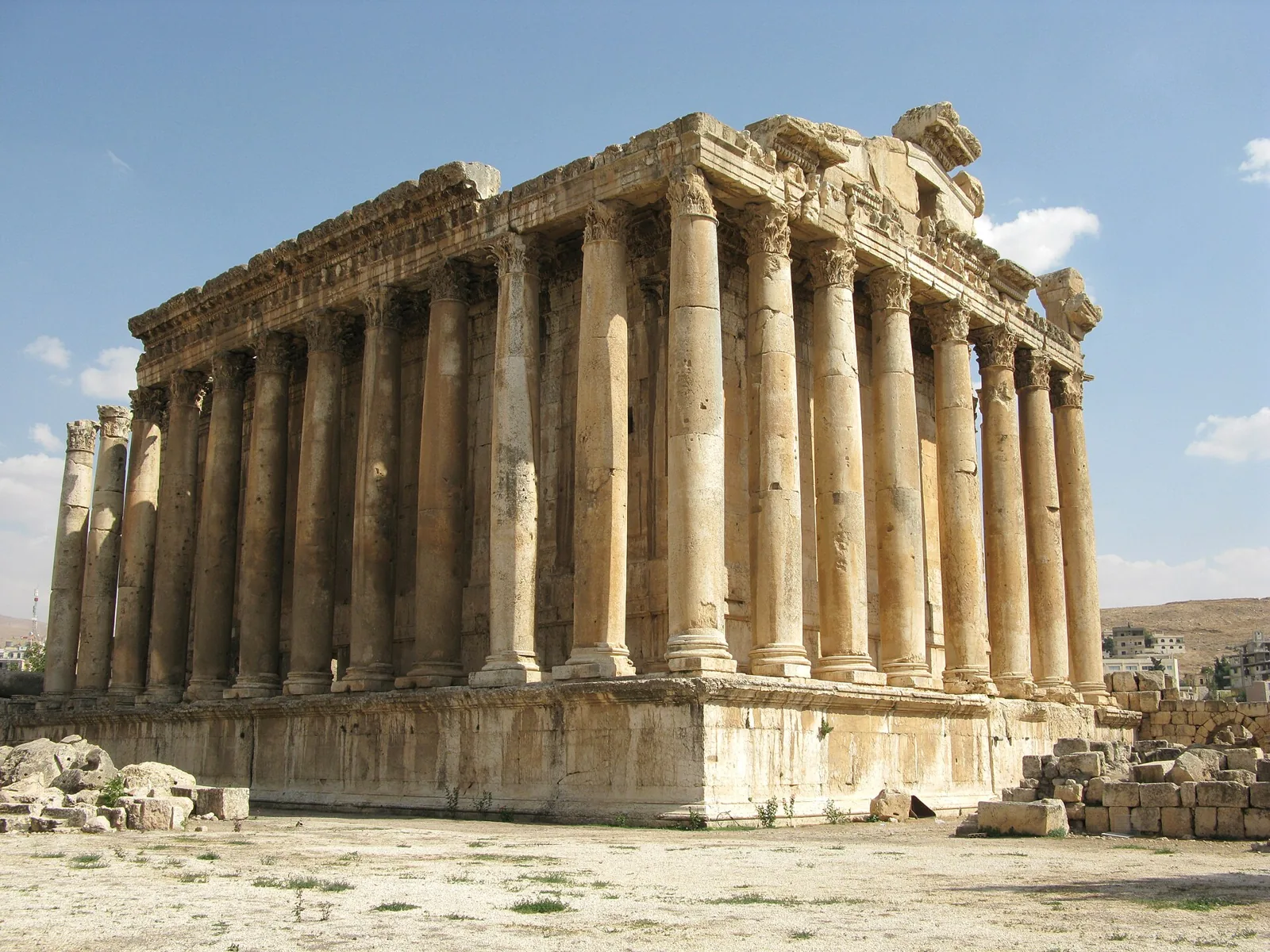
Baalbek's surviving columns and temple architecture communicate extraordinary ambition. Understanding the site is rewarding, but its location and the wider security situation mean a heritage guide must not be mistaken for confirmation that a visit is currently appropriate.
Why Baalbek matters
The ancient city, known in the Roman period as Heliopolis, developed into an important religious centre. Its monumental temple remains represent successive construction and use, not one perfectly preserved moment.
UNESCO recognises Baalbek's exceptional archaeological significance. That status protects and interprets heritage; it does not certify present-day road safety, opening hours or insurance coverage.
Read the architecture
The sanctuary is about movement through spaces as much as individual columns. Courts, stairs, platforms and doorways create a sequence that helps explain ceremonial use and the scale of the complex.
- Distinguish the Temple of Jupiter remains from the better-preserved Temple of Bacchus.
- Look at carved detail in relation to the whole facade rather than isolating ornament.
- Notice changes in level and the engineering needed to support large structures.
- Ask a qualified guide which elements are ancient, conserved or interpreted through reconstruction drawings.
Facts and myths about enormous stones
Large stone blocks often attract unsupported claims about impossible engineering or mysterious builders. Size alone is not evidence for a sensational explanation.
Use archaeological interpretation to distinguish the main sanctuary from nearby quarry features. A photograph of a huge block does not show that it belongs to the same construction phase or had the same purpose as every other element.
If future conditions permit a visit
Check the exact area and the proposed route against current government advice. Do not treat a hotel or driver's willingness to accept a booking as evidence that the journey is recommended.
Ask the responsible site or licensed operator for current admission, opening times, conservation closures and accessibility. We have not verified a universal 2026 ticket price, and do not publish an invented one.
Photography and respectful access
Stay on permitted paths, do not climb carved stone and avoid unstable or cordoned areas. Early or later light can reveal architectural depth when opening arrangements permit, but a lighting preference never justifies unsafe travel or unauthorised access.
Do not photograph checkpoints, military installations or sensitive activity along a route. Drone use requires applicable permissions, not merely an open space.
Put the monument in context
Our Lebanon country introduction explains the broader historical layers. The heritage planning guide compares Baalbek with other destinations without presenting a blanket safe itinerary.
This is an invitation to understand a remarkable archaeological site. Whether and when to visit remains a separate decision governed by current advice, local access and individual circumstances.
Sources and photograph credit
Information checked 29 October 2026. Fees, hours, eligibility and project status can change; confirm with the relevant official authority before paying or travelling.
Photograph: Vyacheslav Argenberg; Lebanon, Baalbek, Temple of Bacchus 2.jpg; CC BY 4.0. Source-recorded date: 2008-09-16 14:50:07. Resized and converted to WebP for the web. Genuine photograph; not a live view or a claim of present-day conditions.
