Iran's story stretches from imperial terraces to courtyard houses, poetry and living bazaars. Understanding that heritage is worthwhile even when a holiday is inappropriate: the current security situation must come before an attractive itinerary.
Begin with geography and identity
Tehran is the capital, while Isfahan, Shiraz, Yazd and Tabriz reveal very different regional identities. Iran is a Middle Eastern country, not a GCC member; Arabic, Gulf visa rules and Gulf tax arrangements should not be assumed here.
Persian, also called Farsi, is the official language. Azerbaijani, Kurdish, Arabic and other languages reflect a diverse population, so describing everyone simply as Persian misses important communities.
Read the history in layers
The Achaemenid era is visible at Persepolis; later Islamic dynasties reshaped cities, institutions and art. Safavid Isfahan and the twentieth-century Pahlavi period belong to different chapters, followed by the Islamic Republic established after the 1979 revolution.
Avoid treating ancient imperial borders as today's borders. A well-researched museum explanation should distinguish archaeological evidence, religious tradition and modern interpretation. Our Persepolis architecture guide introduces one of the strongest surviving monuments.
Poetry, celebrations and everyday courtesy
Nowruz marks the spring new year across several countries and communities, not Iran alone. Family visits, seasonal foods and symbolic household arrangements are important parts of the celebration; public schedules can change around the holiday.
Tea, careful greetings and hospitality matter in many social settings. An invitation is not permission to photograph a home or publish its occupants: ask clearly, and accept a refusal without argument.
Food beyond a kebab stereotype
Rice dishes, herb-rich stews, breads, soups and regional vegetable preparations offer a varied introduction. Ghormeh sabzi, tahdig and ash reshteh are useful names to learn, while recipes and serving customs differ between households.
Discuss meat stock, dairy, nuts and other allergens explicitly. A vegetable-looking dish is not necessarily vegetarian. Our Iran food and neighbourhood guide approaches regional cooking without claiming one definitive national menu.
Heritage landscapes worth understanding
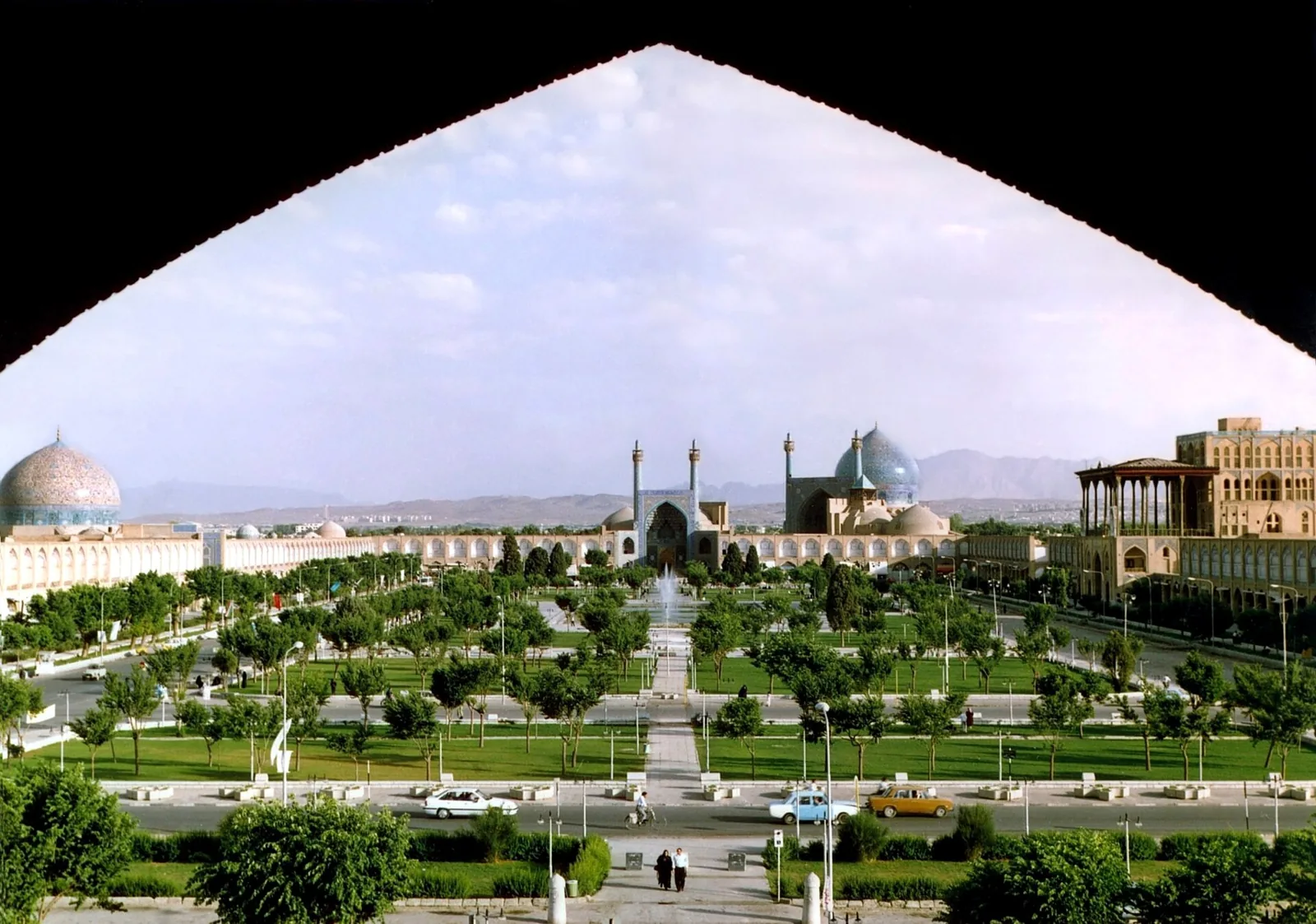
Yazd demonstrates how earth construction, shaded lanes and traditional water systems respond to a dry climate. Isfahan's monumental square illustrates a different relationship between commerce, government and religious architecture.
These are heritage descriptions, not confirmation that a site is accessible today. Historical photographs are clearly dated and credited, and should never substitute for a current security assessment.
Before any travel decision
- Read your own government's advice, including restrictions linked to nationality or dual nationality.
- Confirm lawful entry, communications, insurance and access to money before paying anyone.
- Do not photograph military, security or other sensitive facilities.
- Treat a tour operator's reassurance as separate from government advice and legal requirements.
For legal distinctions between a visit and a longer stay, read our Iran entry and residence overview. Cultural interest is a reason to learn carefully, not a reason to ignore an official warning.
Sources and photograph credit
Information checked 29 October 2026. Fees, hours, eligibility and project status can change; confirm with the relevant official authority before paying or travelling.
- UNESCO: Iran heritage properties
- Current UK government Iran travel advice
- India Ministry of External Affairs: Iran advisories
Photograph: en:User:Arad; Naghshe Jahan Square Isfahan modified.jpg; CC BY-SA 3.0. Source-recorded date: Date not specified. Resized and converted to WebP for the web. Genuine photograph; not a live view or a claim of present-day conditions.
