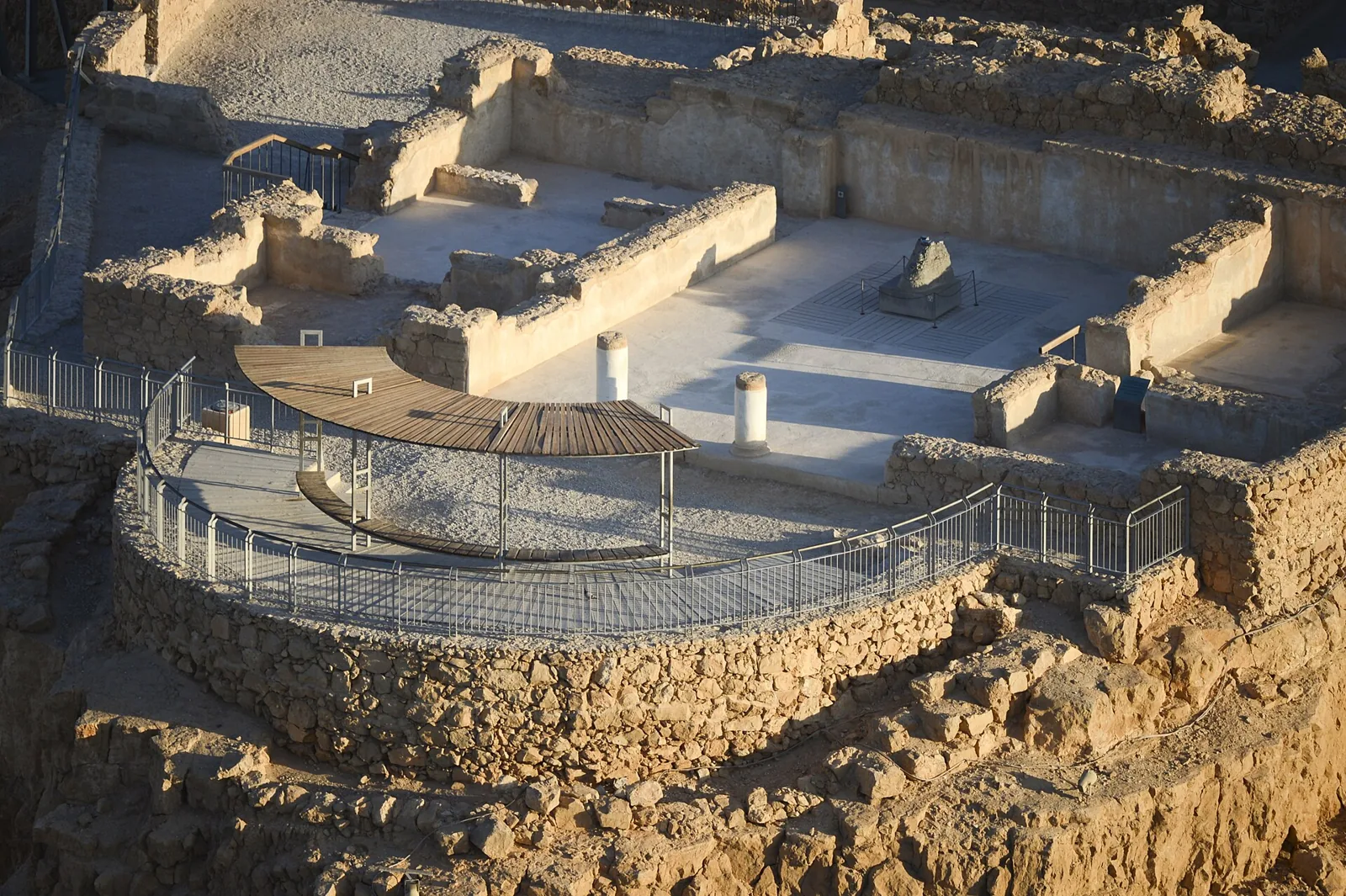
Masada is a dramatic desert plateau where palace remains, defensive walls and the surrounding landscape tell a complex ancient story. Its exposed setting rewards preparation: choosing the right access route matters as much as choosing a camera angle.
What makes Masada remarkable?
Herod developed the summit as a palace-fortress. Later events involving Jewish rebels and the Roman siege became central to its historical significance; interpretation should distinguish ancient accounts from what archaeology can demonstrate.
Look beyond the famous panorama to water storage, terraces and the practical engineering needed to support life in a dry environment. A licensed guide or a careful reading of the park interpretation makes the remains more meaningful than a fast summit photograph.
East entrance, west entrance and access choices
The eastern side provides the familiar cable-car approach, while the western approach serves a different road access and walking route. They are not interchangeable drop-off points connected by a quick road around the mountain.
Tell your driver or tour operator the exact entrance. If a package advertises a sunrise walk, ask where it starts, when the gate opens and how the return journey works. Cable-car operating hours do not necessarily match walking access.
Tickets and timing
Check the park's current reservation page and choose the correct combination of entry and cable-car travel. A basic park ticket should not be assumed to include transport, a guide or an evening production.
Confirm adult, child and concession categories against the live tariff. We deliberately do not present an unverified fixed price as a 2026 guarantee. Allow additional time for queues, security checks, water stops and the descent.
Heat and walking conditions
Visit in cooler conditions when permitted, carry sufficient water and follow ranger closures. A sunrise itinerary can still become a dangerously hot return walk. Exposed paths, steps and uneven ruins may not suit every visitor.
Ask the park about the accessible route and current lift or cable-car arrangements if mobility is a concern. Children need close supervision near edges. Do not improvise a shortcut if the signed trail is closed.
Photographing the plateau respectfully
- Use designated viewpoints for the relationship between the cliffs, palace terraces and desert.
- Early or late permitted light creates texture; respect gate and last-entry times.
- Keep away from cliff edges and do not climb walls for a clearer image.
- Check permission before using a tripod professionally; do not assume drones are allowed.
Can you combine Masada with the Dead Sea?
It can be a logical pairing when roads, security advice and schedules permit. Book an established beach facility rather than walking onto an unfamiliar shoreline; unstable ground and sinkholes make unofficial access unsuitable.
Do not add Ein Gedi without checking its separate restoration and trail notices. For a wider route, see our Israel first-time guide and budget planning article. Choose fewer stops if transport time would force a rushed or overheated day.
Sources and photograph credit
Information checked 28 October 2026. Fees, hours, eligibility and project status can change; confirm with the relevant official authority before paying or travelling.
Photograph: Godot13; Israel-2013-Masada-Aerial 01.JPG; CC BY-SA 4.0. Source-recorded date: 2013-03-28 17:14:18. Resized and converted to WebP for the web. Genuine photograph; not a live view or a claim of present-day conditions.
