Religious architecture in Iran is part of living worship, not simply a collection of decorative interiors. Courtyards, mourning rituals, calligraphy and community institutions need context, and visiting rights are not identical at every site.
Understand the main traditions
Twelver Shia Islam has a central role in Iran's religious and institutional life. Sunni Muslim, Christian, Jewish and Zoroastrian communities also form part of the country's history and present.
Avoid describing all historic buildings as interchangeable mosques. A shrine, a congregational mosque, a monastery and a fire temple have different functions, and the rules for non-members may differ.
Mashhad and Qom
Mashhad's Imam Reza shrine is a major Shia pilgrimage focus. Its significance comes from devotion and religious memory, not merely the scale of its courtyards or ornament.
Qom's Fatima Masumeh shrine has its own spiritual identity and associated scholarly life. Neither destination should be advertised as an unrestricted sightseeing stop: ask the responsible institution about permitted areas, dress and visitor arrangements.
Shiraz and Isfahan
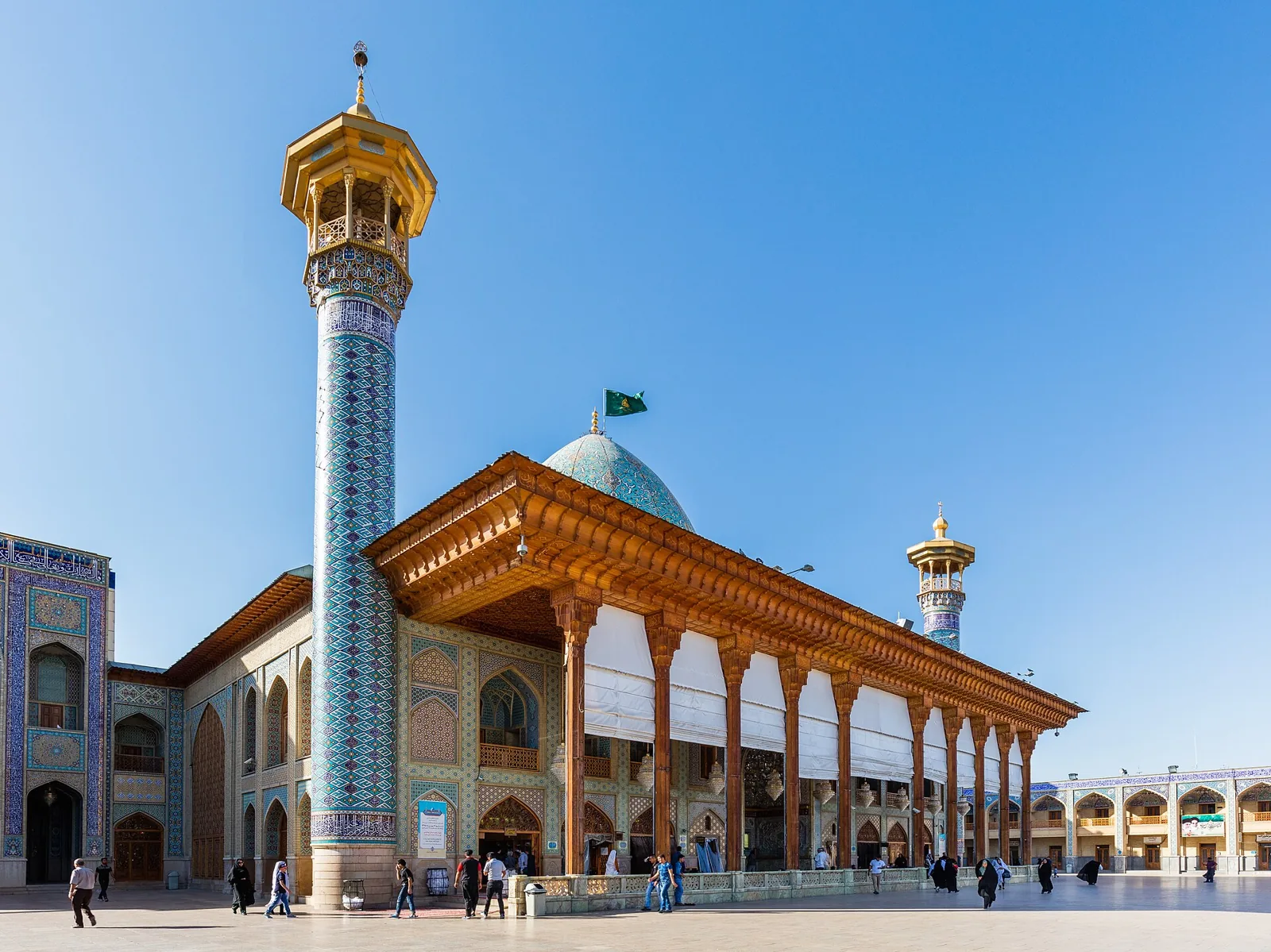
Shah Cheragh in Shiraz is a revered shrine complex. Its photographed decoration should not distract from security checks, worship and the possibility that some spaces are restricted.
Isfahan's historic religious buildings demonstrate the relationship between urban design and faith. Studying the square through our Iran heritage overview helps avoid reducing the city to a single landmark.
Yazd and a broader religious landscape
Yazd's heritage includes Islamic, Jewish and Zoroastrian places and traditions. UNESCO's city description is a useful introduction to this layered urban landscape, but it does not grant access to every religious property.
Ask whether a building is active worship space, a museum or a protected site. A fire temple, in particular, is not an invitation to approach or photograph sacred elements without permission.
Etiquette that matters
- Follow current legal dress requirements and any additional site rules.
- Ask before entering prayer areas, handling footwear or photographing worshippers.
- Keep voices low and give ceremonies space; do not stage portraits in worship routes.
- Confirm rules for cameras, bags and companions before arriving.
Ashura and other religious dates follow calendars that require checking for the relevant year. Crowds, mourning and altered opening arrangements are reasons to seek guidance, not opportunities for intrusive photography.
Current access and safety
This is cultural education, not a pilgrimage booking recommendation under the present travel warning. Permission to enter a religious building would not remove wider detention or security risks.
Read the Iran country guide for context and the legal entry overview for the difference between consular permission and actual admission. Respect begins with recognising that a sacred place does not exist primarily for a visitor's camera.
Sources and photograph credit
Information checked 29 October 2026. Fees, hours, eligibility and project status can change; confirm with the relevant official authority before paying or travelling.
- UNESCO: Iran heritage properties
- UNESCO: Historic City of Yazd
- Current UK government Iran travel advice
- Iran tourism: Shah Cheragh
Photograph: Diego Delso; Mausoleo de Shah Cheragh, Shiraz, Irán, 2016-09-24, DD 32.jpg; CC BY-SA 4.0. Source-recorded date: 2016-09-24 16:50:30. Resized and converted to WebP for the web. Genuine photograph; not a live view or a claim of present-day conditions.
