Lebanon's infrastructure story is about restoring essential services as much as building new assets. Water, power, roads and public buildings affect residents directly, so project reporting needs more precision than an optimistic opening-date headline.
Understand the recovery context
Conflict and the financial crisis have placed pressure on homes, businesses and public services. A recovery framework describes priorities and financing mechanisms; it does not mean every damaged neighbourhood has been rebuilt.
The World Bank's August 2026 economic update describes renewed conflict as a setback to recovery. That context matters when reading earlier project approvals or forecasts.
What LEAP means
The Lebanon Emergency Assistance Project, or LEAP, is a government reconstruction programme supported by World Bank financing. The February 2026 official factsheet describes an expandable framework with initial financing rather than a fully financed, completed national rebuild.
The distinction matters: an overall framework amount, an approved initial loan and money actually spent on a particular contract are three different figures. Do not use one as a substitute for another.
The types of work involved
Public-service restoration can include water, energy, mobility, health and education infrastructure. Early work can also involve assessing damage, dealing with unsafe structures and preparing designs for later construction.
Debris management is a specialist safety task, not an invitation for visitors to enter damaged sites. Explosive remnants, unstable buildings and restricted areas require professional clearance and official controls.
How to read a project announcement
- Is the document a proposal, approval, procurement notice or completion report?
- Which agency implements the work and which area is actually covered?
- Is the budget secured, conditional or an ambition for future contributions?
- What independent evidence shows that a service has resumed?
Use the most recent dated implementation information. A photograph of a repaired street does not prove uninterrupted water or electricity across the surrounding district.
What residents and businesses should ask
For a specific property, verify power supply, backup arrangements, water quality, internet and road access at that address. Ask who pays for additional generation or maintenance and obtain the agreement in writing.
Investors should distinguish public tenders from private offers and check procurement rules through the implementing authority. Our Lebanon business guide covers the separate registration and operational questions.
Heritage and community recovery
Conservation needs specialist assessment, local participation and respect for displaced communities. A restored facade is only one part of recovery; housing, services and livelihoods matter alongside cultural monuments.
Our Lebanon country guide supplies broader context. This article explains how to assess recovery projects; it does not certify individual works as complete or imply that a funded programme makes a travel route safe.
Sources and photograph credit
Information checked 29 October 2026. Fees, hours, eligibility and project status can change; confirm with the relevant official authority before paying or travelling.
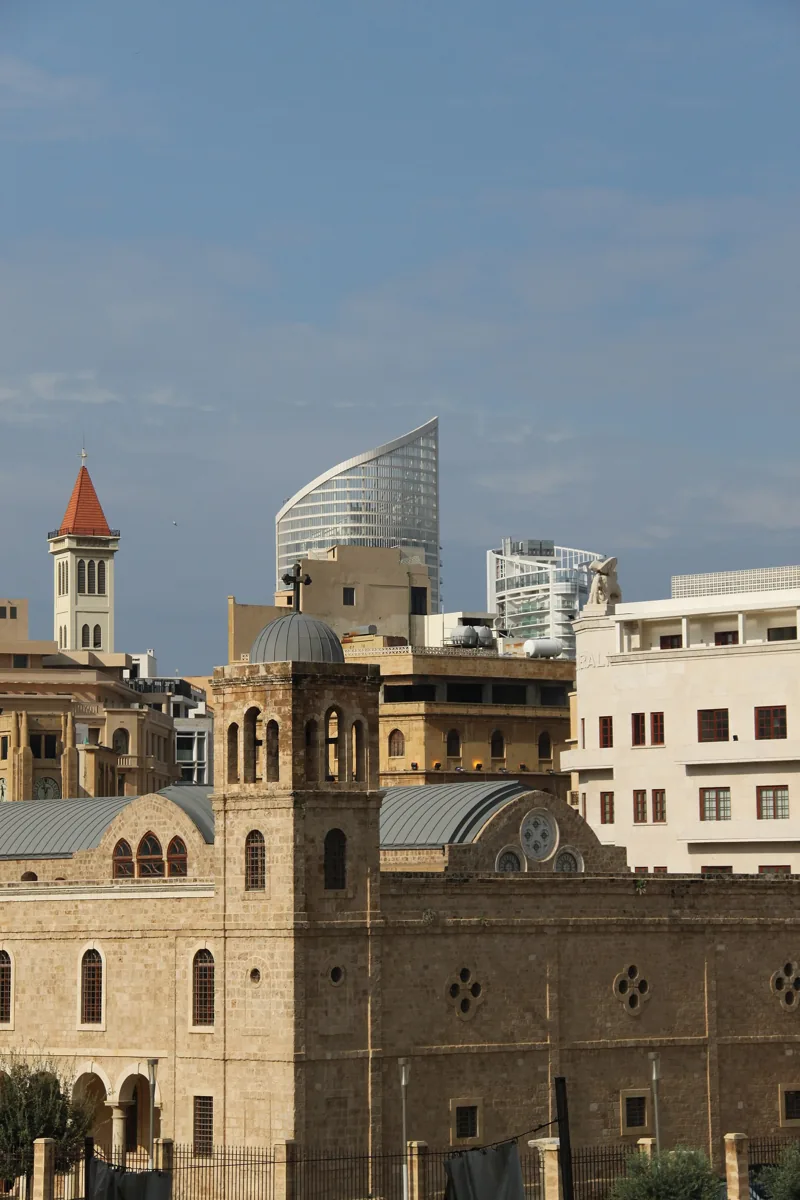
Photograph: Eli; Buildings in downtown Beirut.jpg; CC BY 2.0. Source-recorded date: 2009-12-10 10:33. Resized and converted to WebP for the web. Genuine photograph; not a live view or a claim of present-day conditions.
