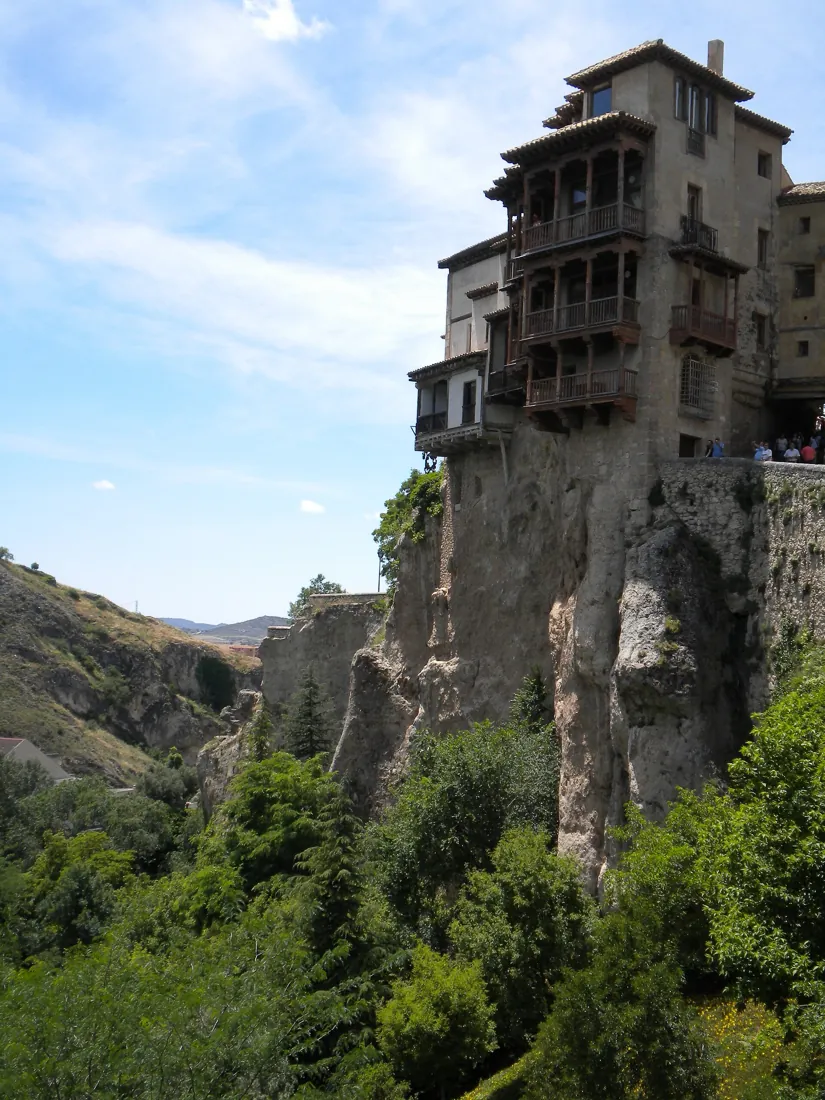
“Hidden gem” is an imperfect label for a well-known heritage city. Cuenca and Cáceres are not undiscovered, but they can offer a different rhythm from a first trip concentrated entirely on Madrid and Barcelona. Visit with curiosity rather than expecting an empty stage.
The reward is time to notice a stone doorway, a small exhibition or a meal that does not have to fit between major attractions.
Cuenca: houses above a gorge
Cuenca's Hanging Houses and dramatic setting make it a strong choice for architecture and landscape together. The old centre combines historic buildings with a notable modern-art connection.
Plan for slopes and uneven surfaces. A short distance on a map may still be physically demanding, so arrange breaks and confirm access if anyone in your group has reduced mobility.
Arrive at the right station
The official tourism guide identifies Fernando Zóbel as Cuenca's high-speed station, outside the centre. Include the onward bus or taxi when assessing your arrival time and total cost.
Do not book a tight return immediately after an old-town visit. Check current transport times and leave room to get back to the station without rushing downhill with luggage.
Look beyond a single photograph
The bridge and gorge views are memorable, but the visit need not end after one image. Choose a museum or an extended old-town walk according to your interests.
Public viewpoints and paid interiors have different conditions. Verify current admission rather than assuming every building associated with the Hanging Houses is freely accessible.
Cáceres: a slower historic centre
Cáceres is another option for travellers drawn to historic streets and a less hurried stay. Consider an overnight visit rather than using it only as a stop between distant cities.
Ask the tourist office which buildings are open on your date and whether a local guided walk suits your interests. A quiet façade does not mean its interior is a public attraction.
Build a food trail, not an eating contest
Choose a market visit, a local lunch and perhaps one smaller tasting stop. Ask what is seasonal and how a dish is prepared rather than ordering the same familiar menu everywhere.
Cuenca's official guide mentions hearty regional dishes including morteruelo and ajoarriero. Confirm ingredients before ordering: traditional dishes can contain meat, fish or other ingredients that do not match vegetarian, allergy or religious requirements.
Practical planning
Spring and autumn can be worth considering, but check the actual forecast and local event dates. Midday closures, restaurant rest days and weather can matter more than the broad season label.
Travelling by car offers flexibility for rural stops, but parking and old-town restrictions require planning. For a city-focused visit, compare public transport before paying for a vehicle that may sit unused.
Questions before adding a detour
Are these places genuinely unknown?
No. They are established destinations; the point is a different itinerary, not a claim of exclusive discovery.
Can I combine them in one rushed day?
That is not the recommended approach. Choose a manageable base and give each destination enough time to justify the transfer.
Continue planning Spain
- Plan a first trip to Spain
- Spain Explained: History, Regional Cultures, Food and Festivals
- Sagrada Família Visitor Guide: Tickets, Towers, Architecture and Photo Tips
- Sacred Spain: Santiago de Compostela, Córdoba and Respectful Heritage Visits
- Spain’s Rail Projects Explained: The Mediterranean Corridor and Smarter Travel
- Spain on a Budget: Free Walks, Museum Planning and Better-Value Meals
- Business Setup in Spain: Company Registration and Entrepreneur Residency
- How to Move to Spain Legally: Work, Study, Family and Remote-Work Routes
- Luxury Spain: Madrid Style, Marbella Marinas and Private Mediterranean Escapes
Official sources and photograph credit
Reconfirm current rules, access and charges with the responsible official source before booking or applying.
- Cuenca: official visitor and transport guide
- Spain official destination directory
- Official Spain tourism
Photograph: Daytonarolexboston; Hanging houses in Cuenca Spain.jpg; CC BY-SA 3.0. Resized and converted to WebP. Genuine archival photograph, not a live view.
