A rail project can change how a country moves long before a traveller can buy a ticket on it. Spain's Mediterranean Corridor is a useful example: it is a connected programme of improvements, not one train that suddenly opens from end to end.
For a trip, the important question is not simply whether construction has started. It is whether your exact passenger journey is operating on the date you need.
What the corridor is for
The European Commission describes the Mediterranean Corridor as a major cross-border transport axis, including Spain and links onward through Europe. Passenger mobility and freight connections both matter to the programme.
That means port access, compatibility between networks and railway capacity belong in the story alongside headline journey speeds. A freight improvement may be important without creating a new tourist service.
Works are not the same as services
A Spanish government update dated 20 November 2025 described substantial works and investment along the corridor. It is a record of the programme at that time, not proof that every section is now complete.
Avoid interpreting phrases such as “in progress” as “open to passengers.” Construction, testing, infrastructure authorisation and the operator's timetable are separate stages.
Why engineering takes coordination
Rail improvements can involve stations, tracks, electrification, signalling and connections with existing lines. Work also has to account for trains already using the network.
For readers, a useful project update should identify the section and the type of work. A national headline without that detail is a poor basis for deciding which station or ticket to book.
Do not confuse the photograph with the project
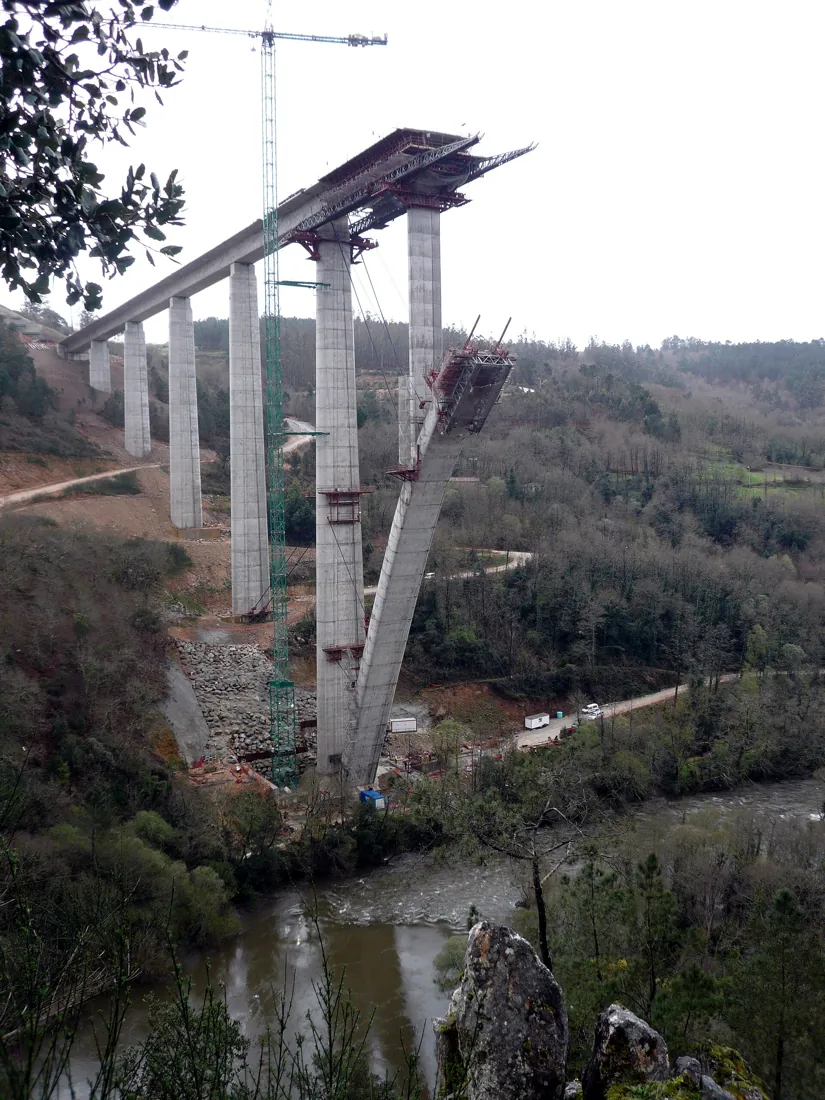
The archival image accompanying this article shows the Ulla high-speed railway viaduct in Galicia during construction. It illustrates Spanish railway engineering; it is not a current photograph of Mediterranean Corridor works.
Infrastructure pictures circulate for years. Check the location and date before treating an impressive bridge image as evidence of a newly opened route.
Plan an actual journey
Search the operator's current timetable for your exact origin, destination and date. Check station names carefully, including whether a high-speed station lies outside the historic centre.
Allow time for the local connection and compare the full door-to-door journey. The fastest train time alone does not include reaching the station, security procedures or a transfer at the other end.
Build flexibility into bookings
Read operator notices about planned works and replacement transport before buying non-refundable accommodation. For a connection involving different tickets, understand who is responsible if the first leg is delayed.
Keep a reasonable buffer before flights and important appointments. If the schedule is not yet on sale, that does not automatically mean the service is cancelled or that a new line will be ready.
Common questions
Can I travel on every corridor section today?
Do not assume so. Verify the specific service directly with the operator.
Is a project opening date a guaranteed holiday timetable?
No. Forecast completion dates and bookable passenger services are different pieces of information. Use current transport information for decisions and dated official announcements for project context.
Continue planning Spain
- Plan a first trip to Spain
- Spain Explained: History, Regional Cultures, Food and Festivals
- Sagrada Família Visitor Guide: Tickets, Towers, Architecture and Photo Tips
- Sacred Spain: Santiago de Compostela, Córdoba and Respectful Heritage Visits
- Spain on a Budget: Free Walks, Museum Planning and Better-Value Meals
- Spain Beyond the Obvious: Cuenca, Cáceres and Slower Food Trails
- Business Setup in Spain: Company Registration and Entrepreneur Residency
- How to Move to Spain Legally: Work, Study, Family and Remote-Work Routes
- Luxury Spain: Madrid Style, Marbella Marinas and Private Mediterranean Escapes
Official sources and photograph credit
Reconfirm current rules, access and charges with the responsible official source before booking or applying.
- European Commission: Mediterranean Corridor
- Dated Spanish government corridor update, 20 November 2025
- European Commission: railway network investments
- Renfe: current journey planning
Photograph: Felipe Gabaldón; Viaducto de Alta Velocidad sobre o río Ulla.jpg; CC BY 2.0. Resized and converted to WebP. Genuine archival photograph, not a live view.
