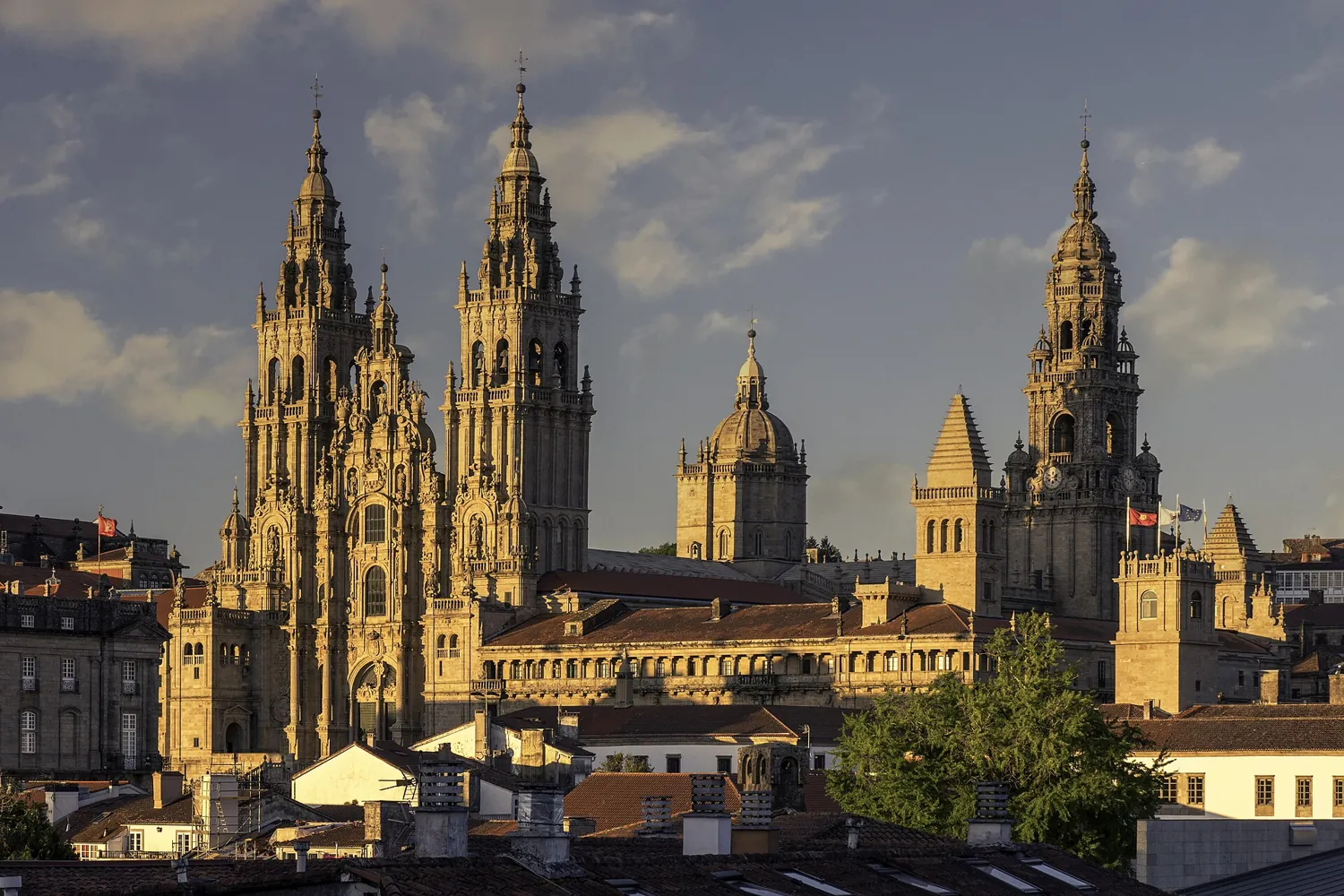
Spain's sacred places are living institutions as well as architectural landmarks. A pilgrim arriving in Santiago and a visitor studying Córdoba's arches may share an interest in heritage while approaching it for very different reasons. Plan for both the building and the people who use it.
These two cities are not a quick combined day trip. Choose one regional visit or allow enough travel time to explore each properly.
Santiago: an arrival with meaning
Santiago de Compostela is the destination of the Camino de Santiago pilgrimage tradition. Its cathedral and surrounding squares give a visit a sense of arrival, even if you have not walked a pilgrimage route.
The historic centre also supports an ordinary city life. Spend time around the cathedral without assuming every person carrying a backpack wants to pose for a photograph or explain a personal journey.
Separate worship from visitor products
A cathedral visit, a museum product and a roof tour can have different entry arrangements. Check the cathedral's official visitor information rather than assuming one ticket covers everything.
The Botafumeiro incense burner is not guaranteed at every service. Official tourism information describes particular occasions or arrangements; an old video is not a reliable timetable for your date.
Córdoba: read the layers carefully
The Mosque-Cathedral is central to Córdoba's Islamic and Christian architectural history. The surrounding Jewish quarter, Roman bridge and other monuments provide a broader context for a visit.
It functions today as a Catholic cathedral. Do not describe it as an unrestricted public prayer space for every tradition or reduce its complex history to a simple story of uninterrupted harmony.
Practical access and costs
Check each institution's current admission products, service times and visitor restrictions before travelling. A guided tour sold by a third party is not the same thing as the institution's standard admission.
Budget separately for transport, any timed heritage products and a guide if desired. Walking around public squares does not imply that all adjoining religious buildings or special areas are free.
Clothing, photographs and quiet
Choose respectful clothing and follow posted instructions on headwear, flash, filming and restricted areas. Keep conversations low around services and avoid blocking worshippers or processions.
Ask before taking close photographs of individuals. Do not use a religious ceremony as a backdrop for an intrusive staged shoot.
Build a comfortable itinerary
In Santiago, allow for changeable weather and slippery stone surfaces. In Córdoba, organise walking around the forecast and heat, with time indoors and a proper lunch break.
Stay near the historic area if reduced walking or an early service matters, but check vehicle access before booking a taxi to a pedestrian street. Confirm accessibility with the institution for the exact area you want to visit.
Questions travellers ask
Must I be a pilgrim to visit Santiago?
No. Cultural visitors can explore respectfully while recognising the religious significance of the place.
Can I rely on a free-entry time mentioned in an old article?
No. Recheck current conditions, capacity and which areas the offer covers directly with the operator.
Continue planning Spain
- Plan a first trip to Spain
- Spain Explained: History, Regional Cultures, Food and Festivals
- Sagrada Família Visitor Guide: Tickets, Towers, Architecture and Photo Tips
- Spain’s Rail Projects Explained: The Mediterranean Corridor and Smarter Travel
- Spain on a Budget: Free Walks, Museum Planning and Better-Value Meals
- Spain Beyond the Obvious: Cuenca, Cáceres and Slower Food Trails
- Business Setup in Spain: Company Registration and Entrepreneur Residency
- How to Move to Spain Legally: Work, Study, Family and Remote-Work Routes
- Luxury Spain: Madrid Style, Marbella Marinas and Private Mediterranean Escapes
Official sources and photograph credit
Reconfirm current rules, access and charges with the responsible official source before booking or applying.
- Santiago de Compostela official destination guide
- Santiago Cathedral visitor information
- Córdoba official destination guide
- Mosque-Cathedral official institution
Photograph: Fernando Pascullo; Santiago Compostela Cathedral 2023 – View from Alameda Park.jpg; CC BY-SA 4.0. Resized and converted to WebP. Genuine archival photograph, not a live view.
