Lebanon combines Mediterranean coastal cities, mountain communities and a remarkably layered cultural history. Its compact map can be misleading: altitude, traffic, local conditions and security boundaries make planning more complex than a quick drive between landmarks.
Essential orientation
Beirut is the capital and a major cultural and commercial centre. Lebanon is not a GCC country, and Gulf residence, company-formation or tax rules should not be copied into a Lebanese plan.
Arabic is the official language, with French and English also used in many settings. The Lebanese pound is the national currency; actual billing and payment practices require checking with each provider rather than assuming one universal exchange arrangement.
History in several layers
Phoenician maritime connections, Roman monuments, later religious traditions, Ottoman rule and the French Mandate all contribute to the country's story. Independence in 1943 is a central modern milestone.
The civil war, post-war reconstruction, the financial crisis and more recent conflict also shape daily life and the built environment. A travel story should acknowledge those experiences without defining residents only through crisis.
Culture and community
Lebanon contains multiple religious communities and varied local customs. Public holidays, religious observances and family celebrations can affect traffic, shop hours and the rhythm of a neighbourhood.
Ask before photographing people or ceremonies, dress appropriately at worship sites and avoid assuming that one area's practice represents the whole country. Our sacred heritage guide explains how to approach religious places respectfully.
Food as everyday social life
A bakery breakfast, shared mezze and a leisurely family meal offer different ways to understand hospitality. Man'oushe, labneh, tabbouleh and kibbeh are useful starting points, with regional and household variations.
Food names do not settle dietary suitability. Ask about raw meat, dairy, sesame, nuts and preparation surfaces. Our Lebanon food trails includes practical questions to ask before ordering.
Landscapes and heritage
Byblos illustrates long Mediterranean connections; Baalbek's monumental remains show a very different historical scale. Mountain valleys and cedar landscapes add ecological and religious dimensions.
These descriptions are not a declaration that every route is currently open or appropriate. Advice varies by area, including places where governments advise against all travel or all but essential travel.
A realistic planning approach
- Match the exact destination and road route against current official advice.
- Confirm accommodation, power, water and communications at the actual address.
- Check lawful entry for your passport and purpose, not simply your country of residence.
- Obtain current quotes and clear cancellation terms before paying.
Read the Lebanon entry and relocation overview and the heritage highlights before turning cultural interest into reservations. Good planning leaves room to change or postpone a journey.
Sources and photograph credit
Information checked 29 October 2026. Fees, hours, eligibility and project status can change; confirm with the relevant official authority before paying or travelling.
- UNESCO: Lebanon heritage properties
- UK government: current Lebanon regional advice
- Lebanese General Security: entry requirements
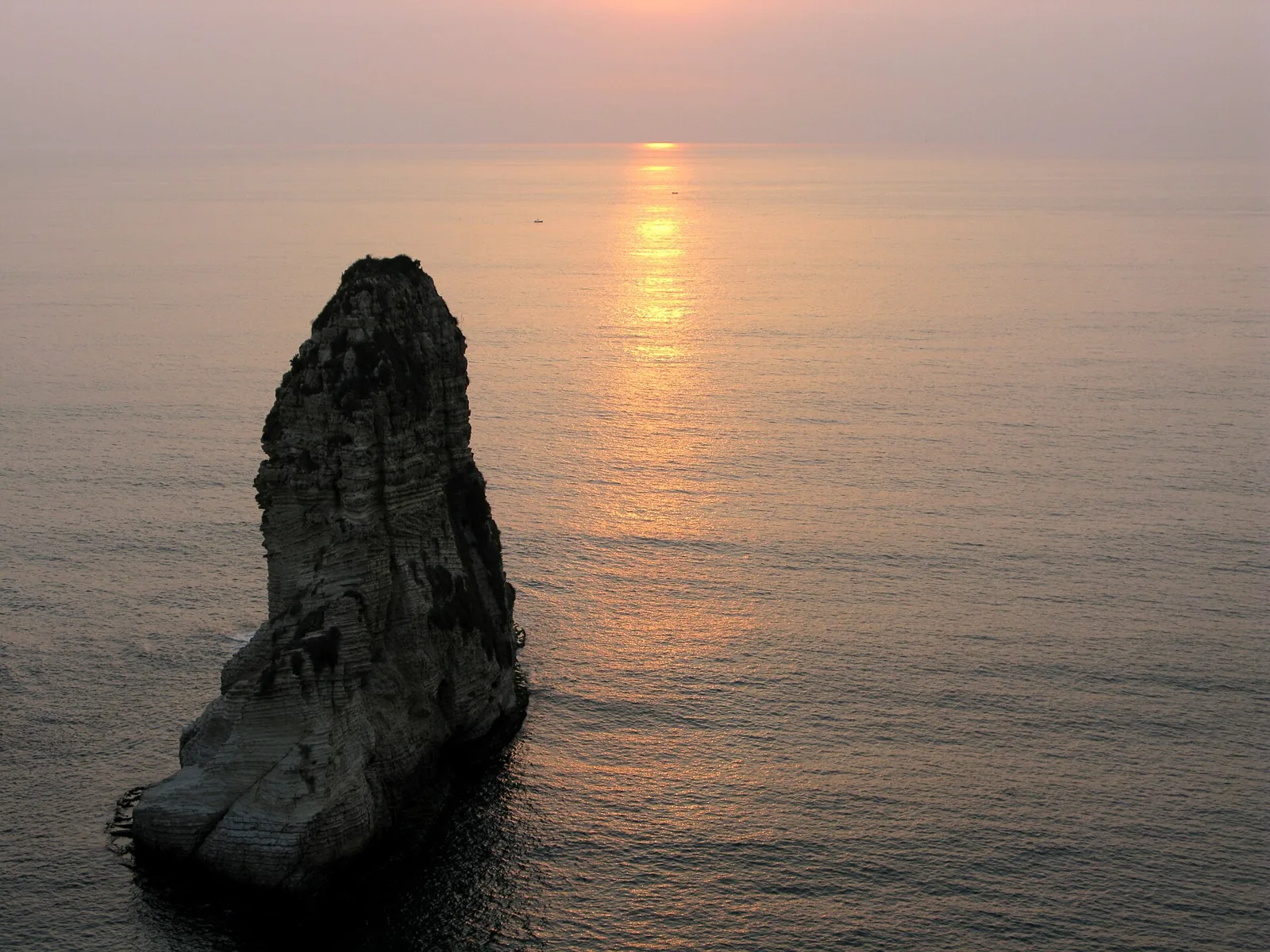
Photograph: Vyacheslav Argenberg; A sunset on the Mediterranean sea, Pigeon Rocks, Beirut, Lebanon.jpg; CC BY 4.0. Source-recorded date: 2008-09-06 18:30:56. Resized and converted to WebP for the web. Genuine photograph; not a live view or a claim of present-day conditions.
